How Restaurant Application Development Improves Ordering and Customer Experience
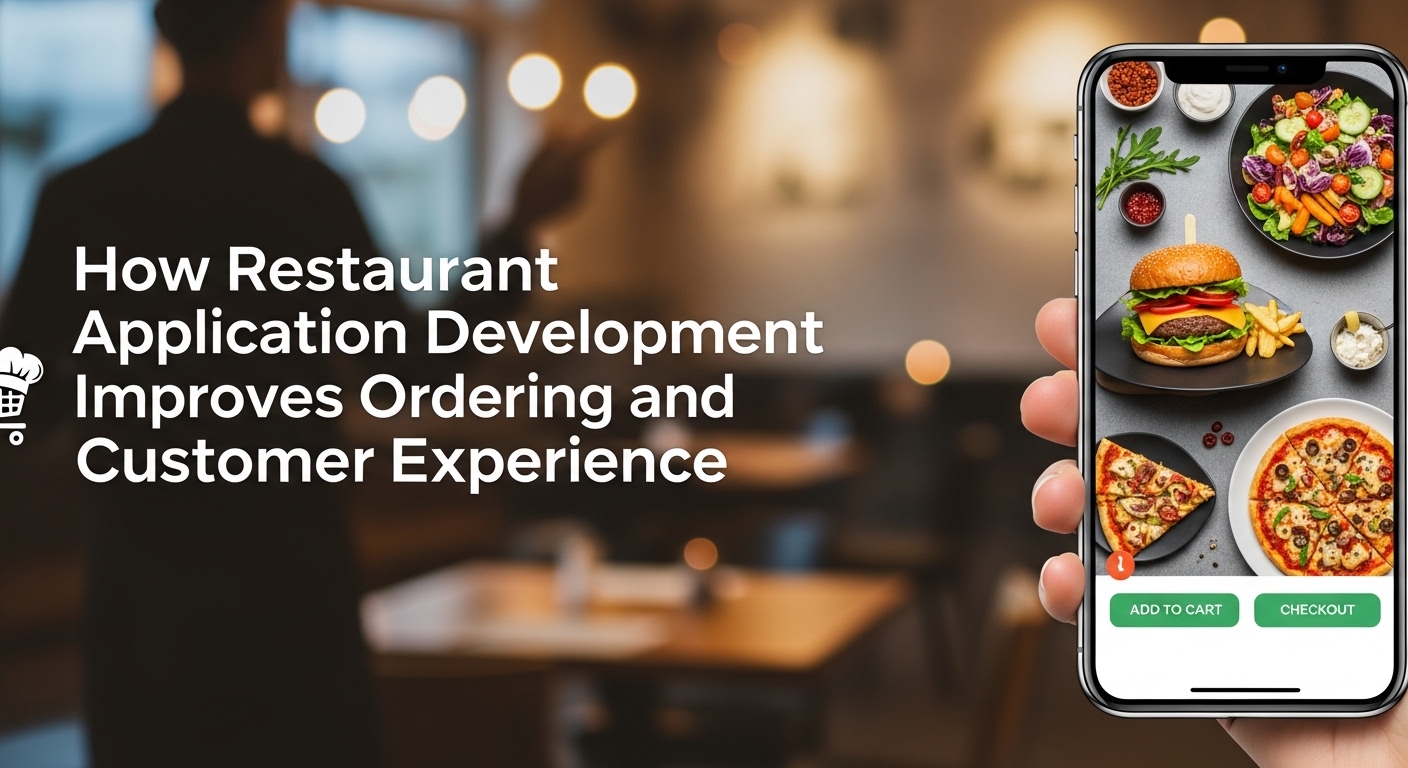
Restaurants do not lose customers only because of food quality. They lose them because the overall experience feels slow, inconvenient, or inconsistent. Long wait times, confusing ordering flows, missed updates, payment friction, and weak communication all damage customer satisfaction faster than many owners admit.
That is why restaurant application development has become a serious growth investment. For restaurant owners, operators, founders, and decision makers, the value is no longer limited to having an app for branding. The real value is in creating a smoother ordering journey, improving customer convenience, and making operations easier to manage.
If done properly, restaurant apps do more than digitize the menu. They improve how customers interact with the brand from discovery to repeat purchase.
Ordering has become a customer experience issue
A lot of restaurants still think of ordering as a basic transaction. That is outdated. Customers now judge the brand based on how easy it is to browse, customize, pay, track, and reorder.
If the process feels frustrating, people abandon the order or move to a competitor that makes it simpler.
A restaurant app improves ordering by reducing friction across the full flow:
- menu browsing
- item customization
- cart management
- payment
- order tracking
- delivery or pickup coordination
- repeat ordering
This matters because convenience drives repeat business. A good meal can win a customer once. A smooth digital experience helps keep them.
Faster ordering leads to more completed purchases
The longer it takes for a customer to complete an order, the higher the drop-off risk. Too many steps, poor navigation, slow loading, and unclear pricing all reduce conversion.
A well-designed restaurant application helps by making the journey shorter and clearer.
Key improvements include
- simplified menu categories
- faster item selection
- saved preferences
- easy add-ons and customization
- secure one-step or low-friction payments
- quick reorder options
These features are not minor UX upgrades. They directly affect order volume and customer satisfaction.
Better apps improve repeat ordering behavior
Repeat orders are where many restaurant businesses build stronger margins. Acquiring new customers costs more than bringing existing ones back.
Restaurant apps help increase repeat purchases because they make re-engagement easier. Customers do not need to search again, re-enter details, or start from scratch every time.
Features that support repeat ordering
- favorite orders
- past order history
- reorder in one tap
- loyalty rewards
- personalized offers
- scheduled ordering reminders
When the app remembers customer behavior, the experience feels easier and more relevant. That increases retention.
Real-time updates reduce confusion and support trust
One of the most common complaints in digital food ordering is lack of visibility. Customers place an order and then wonder what is happening. Is it confirmed? Is it being prepared? Is it delayed? Has it been dispatched?
That uncertainty creates unnecessary frustration.
A restaurant application improves this by giving users clear real-time updates such as:
- order confirmation
- preparation status
- estimated ready time
- delivery tracking
- pickup instructions
- delay notifications
This does not just improve convenience. It builds trust. Customers are more patient when the system communicates clearly.
Personalization makes the experience feel smarter
Generic ordering experiences are weaker because they treat every customer the same. Restaurant apps perform better when they reflect customer behavior and preferences.
That can include:
- recommended dishes based on previous orders
- preferred cuisine or meal suggestions
- location-based offers
- reminders tied to ordering habits
- personalized loyalty rewards
This is where working with an ai application development company can add real value. AI can help restaurants make recommendations more relevant, automate customer communication, and improve promotional targeting without making the experience feel forced.
The point is not to add AI for trend value. The point is to make ordering easier and more useful.
Restaurant apps improve the in-store and online connection
A lot of restaurants treat digital ordering and physical operations as separate worlds. That creates problems. The customer may place an order online, but the in-store team still needs to prepare, manage, fulfill, and communicate efficiently.
Restaurant application development works best when it connects front-end ordering with operational workflows.
This can support:
- kitchen coordination
- order queue visibility
- table service requests
- pickup management
- delivery handoff
- inventory-linked menu updates
That is one reason many restaurants also invest in strong backend and dashboard systems through a web app development agency. The customer-facing app is only one part of the experience. The internal system behind it matters just as much.
Mobile convenience shapes customer loyalty
People order food in moments of urgency, habit, or convenience. They want fast access, clear choices, and low effort. That makes mobile experience a major loyalty factor.
A strong mobile app can help restaurants stay visible and accessible during those decision moments. Whether the customer wants lunch delivery, dinner pickup, or a quick repeat order, the app keeps the brand within easy reach.
For restaurants that want consistent performance across devices and platforms, some teams evaluate a custom flutter app development company approach to build and maintain smoother mobile experiences more efficiently.
What matters most is not the framework itself. It is whether the final product feels fast, intuitive, and dependable.
Better ordering systems reduce operational mistakes
Customer experience suffers when orders are wrong, delayed, duplicated, or poorly communicated. Many of these issues are not staff problems alone. They come from weak systems.
A better restaurant app can reduce these risks through:
- accurate item customization flows
- clearer order confirmation
- automated ticket generation
- fewer manual handoff errors
- better synchronization between systems
- more reliable customer notifications
Operational efficiency and customer experience are connected. If the ordering system is messy internally, the customer will feel it externally.
Local restaurant competition makes digital quality more important
In crowded markets, the food itself is only one part of the decision. Customers compare speed, ease, convenience, offers, and overall usability.
That is why restaurants in competitive regions often work with a mobile app development company atlanta or similar market-focused development partner when they want to improve local digital experience and customer retention.
The app becomes part of the brand promise. If it performs poorly, customers notice. If it works well, it gives the restaurant an edge.
Loyalty programs work better inside the app
Many loyalty systems fail because they are disconnected from the actual customer journey. Restaurant apps solve this by placing loyalty directly where the order happens.
This can improve adoption through:
- automatic point tracking
- reward visibility at checkout
- personalized offers
- milestone-based incentives
- referral rewards
- repeat-order discounts
When customers can see and use rewards without extra effort, participation increases. That improves retention and long-term value.
Restaurant apps generate better customer data
Another major benefit is visibility into customer behavior. Without digital systems, restaurants often rely on assumptions. With a well-built app, they can understand:
- what customers order most
- when they order
- where drop-offs happen
- which offers perform best
- how often people return
- what drives higher ticket value
This helps restaurant leaders make smarter decisions about menus, promotions, operations, and customer engagement.
Final thoughts
Restaurant application development improves ordering and customer experience because it reduces friction where customers feel it most. It simplifies browsing, speeds up checkout, supports repeat orders, improves communication, and connects digital convenience with better operations.
For restaurant owners and decision makers, the value is bigger than simply having an app. The real value is building a system that helps customers order more easily and gives them a reason to come back.
That is what makes restaurant apps worth investing in. Not because every business wants another digital product, but because better ordering experiences now play a direct role in growth, retention, and customer loyalty.












Post Comment