
If you’re a woman living with PCOS, you already know it comes with more than just irregular periods and hormonal fluctuations. One of the most emotionally difficult symptoms and one that often doesn’t get talked about enough is hair loss.
PCOS hair loss is real, it’s progressive, and it affects thousands of women across Kerala every single day. And if you’re in Trivandrum and wondering whether PRP or a hair transplant is the right solution for you, this guide is going to give you the honest, clear answers you deserve.
Why Does PCOS Cause Hair Loss?
Before comparing treatments, it helps to understand what’s actually happening inside your body.
PCOS Polycystic Ovary Syndrome causes an imbalance in female hormones, leading to higher than normal levels of androgens, commonly referred to as male hormones. One of these androgens is DHT Dihydrotestosterone. DHT is the same hormone responsible for male pattern baldness, and in women with PCOS, elevated DHT levels attack hair follicles in the same way gradually shrinking them, weakening the hair they produce, and eventually causing them to stop growing hair altogether.
This is why PCOS hair loss typically follows a female pattern diffuse thinning across the crown and top of the scalp, a widening parting, and an overall reduction in hair density rather than complete bald patches.
Understanding this hormonal mechanism is important because it directly influences which treatment will work best for your specific situation.
PRP Hair Treatment for PCOS Hair Loss – What It Offers
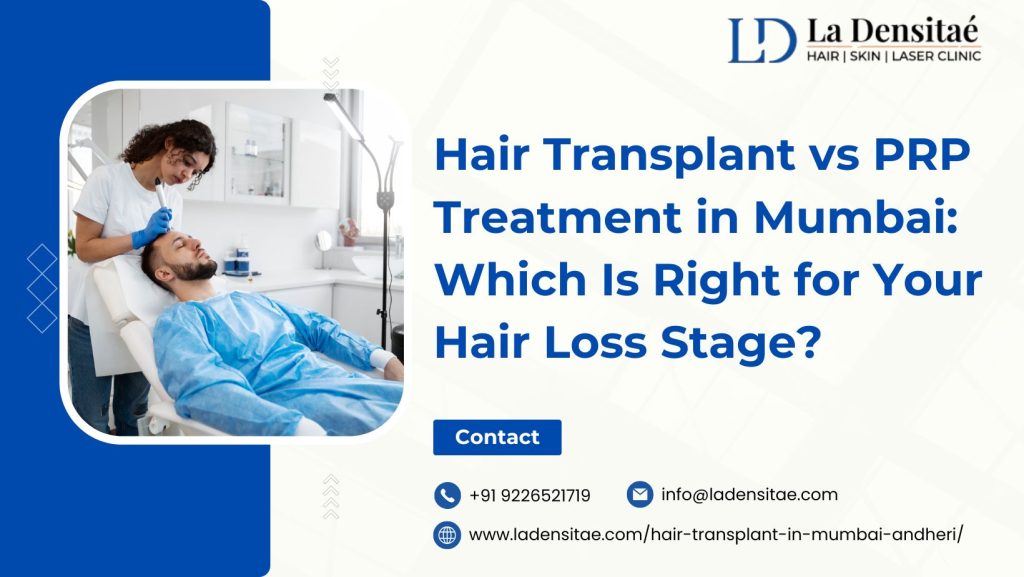
PRP hair treatment Platelet-Rich Plasma therapy is one of the most widely recommended non-surgical options for women dealing with hormonal hair loss. And for PCOS patients in Trivandrum, it’s often the logical first step.
Here’s how it works a small amount of your blood is drawn, processed to concentrate the platelets and growth factors, and then injected directly into your scalp. These growth factors stimulate weakened follicles, improve blood supply to the scalp, and encourage hair to re-enter the active growth phase.
For PCOS hair loss in its early to moderate stages where follicles are weakened but still alive PRP can deliver meaningful, visible improvement. Most patients notice reduced shedding within four to six weeks, improved hair thickness by month three, and visible density improvement by months four to six.
The important thing to understand about prp hair treatment for PCOS patients is that it works best when the underlying hormonal condition is also being managed medically. PRP stimulates your existing follicles but if DHT levels remain unaddressed, hair loss can continue to progress despite treatment. This is why combining PRP with appropriate hormonal therapy, prescribed by a qualified gynaecologist or endocrinologist, gives far better long-term outcomes than PRP alone.
How to Control Hair Fall for Women with PCOS Alongside PRP
How to control hair fall for women with PCOS is about more than just scalp treatments. A comprehensive approach gives you the best results.
Managing your PCOS medically through medication, diet, and lifestyle reduces androgen levels and creates a hormonal environment where hair loss slows down naturally. A diet rich in protein, iron, zinc, and biotin supports hair health from within. Reducing stress through regular exercise and proper sleep makes a surprisingly significant difference to both PCOS symptoms and hair quality. Avoiding heat styling, harsh chemical treatments, and tight hairstyles reduces additional mechanical stress on already fragile hair.
These steps don’t replace medical treatment but they amplify the results of whatever treatment you choose significantly.
Hair Transplant for PCOS Hair Loss – When Does It Make Sense?
Hair transplant becomes relevant for PCOS patients when hair loss has progressed to the point where non-surgical treatments can no longer adequately restore density. When follicles have miniaturised to the point of no return, PRP and other non-surgical treatments simply can’t revive them and this is where surgical restoration becomes the most effective permanent solution.
A hair transplant works by relocating healthy, DHT-resistant follicles from the back of your scalp the donor area to the thinning zones on top. Because these donor follicles are genetically resistant to DHT, the transplanted hair grows permanently even in the elevated androgen environment created by PCOS.
For Trivandrum women with advanced PCOS hair loss, hair transplant in Trivandrum can be genuinely life-changing. The density, the natural hairline, and the permanence of results are things no non-surgical treatment can fully replicate for advanced cases.
However, there’s an important condition PCOS must be medically controlled before and after the procedure. If androgens remain elevated and unmanaged, the natural hair surrounding the transplanted area will continue to thin which can undermine the overall appearance of the result over time.
PRP vs Hair Transplant – A Direct Comparison for PCOS Patients
The choice between PRP and hair transplant for PCOS hair loss really comes down to three factors the stage of your hair loss, your expectations, and whether your PCOS is medically managed.
PRP is the right choice if your hair loss is in the early to moderate stage, your follicles are weakened but still active, you want a non-surgical approach with no downtime, and you’re committed to combining it with hormonal management and lifestyle changes. It’s an investment in preserving and strengthening what you have and for the right patient, it delivers meaningful, real improvement.
Hair transplant is the right choice if your hair loss has progressed significantly, you have clearly thinning or balding areas that non-surgical treatments can no longer address, your PCOS is medically controlled and stable, and you want a permanent, long-term solution rather than ongoing maintenance treatments. It’s a bigger commitment financially and physically but the results for the right candidate are transformative and lasting.
Some women need both starting with PRP to stabilise hair loss and manage the early stages, then considering hair transplant later if significant thinning areas remain. A good specialist will guide you through this journey honestly rather than pushing you toward the most expensive option immediately.
Choosing the Right Clinic in Trivandrum
Whether you’re leaning toward PRP or a hair transplant in Trivandrum, the clinic you choose matters enormously especially for PCOS patients where hormonal factors add an extra layer of complexity to the treatment decision.
Look for a clinic where the specialist understands both the dermatological and hormonal dimensions of PCOS hair loss. A good doctor will assess your scalp health, review your PCOS history and current hormone levels, and recommend a treatment plan that addresses both the symptoms and the underlying cause not just the visible hair loss.
Never commit to any procedure after a rushed consultation. A thorough, unhurried assessment is the foundation of good outcomes and any reputable clinic offering hair transplant services will insist on this before recommending anything.
Final Thoughts
PCOS hair loss is a deeply personal struggle but it is not one you have to simply accept. Both PRP and hair transplant offer real, effective pathways to restoration the right one for you depends entirely on where you are in your hair loss journey and how well your PCOS is being managed medically.
The most important first step is a proper consultation with a qualified hair specialist who understands female hormonal hair loss and can give you an honest, personalised recommendation.
Your hair health and your confidence are both worth fighting for and in Trivandrum, the expertise to help you do exactly that is available right now.