
Thinking about getting a tattoo removed can bring up a lot of questions.
You might wonder how many sessions you will need, how much it will hurt, and most of all, what it will do to your skin.
This is even more important in a sunny city like Cape Town, where strong light and outdoor life can change how skin heals.
Understanding how tattoo removal in Cape Town affects your skin helps you plan and reduce risk.
What Happens to Your Skin During Laser Tattoo Removal?
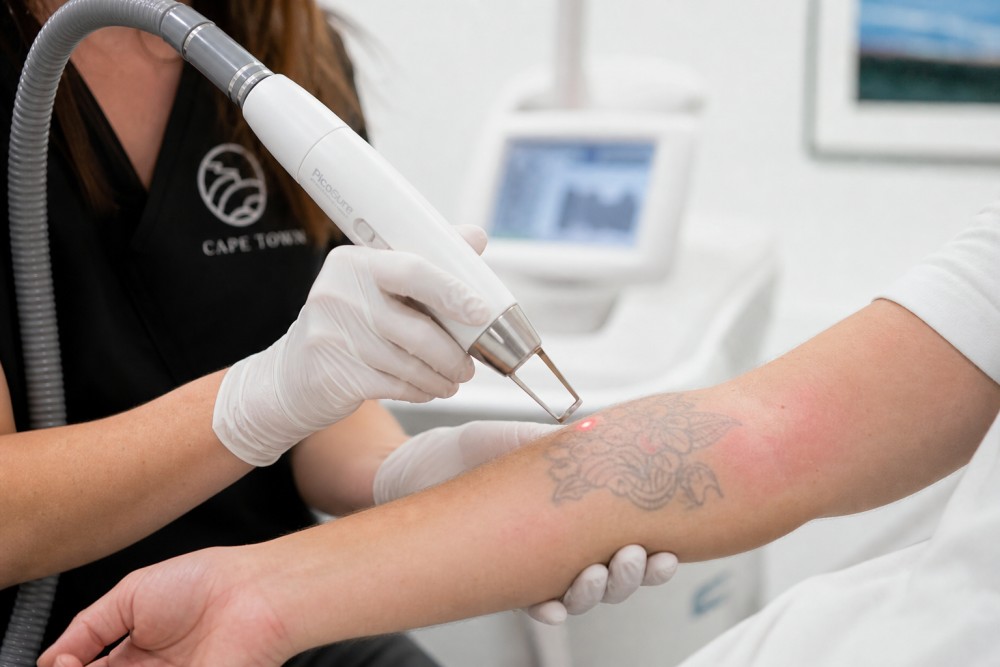
Most modern tattoo removal in Cape Town is done with a laser.
The laser sends very short bursts of light into the skin.
This light hits the tattoo ink and breaks it into tiny pieces.
Your body’s immune system then slowly carries those pieces away over weeks and months.
The laser is aimed at the ink, but the skin around it still feels the heat and stress of treatment.
Short-Term Effects You Can Expect
During the session
While the laser is working, you may feel:
- Sharp snaps on the skin, like a rubber band
- Heat or strong tingling
- A “frosted” white look on the tattooed area for a few minutes
The white look is normal. It comes from tiny gas bubbles under the skin and fades quickly.
Right after treatment
In the hours after a session, the skin often:
- Turns red or pink
- Feels warm or tender
- Swells slightly
Some people get tiny pin‑point spots of bleeding or clear fluid.
This is part of the normal stress response of the skin to the laser.
The first few days
Over the next days, the treated area may:
- Form light scabs or crusts
- Feel tight or a bit itchy
- Look bruised in places
You should not pick or scratch it.
Pulling off scabs too early can lead to marks or scars.
Longer-Term Changes to the Skin
Colour changes
One of the most common long‑term effects of tattoo removal in Cape Town is a change in skin colour where the tattoo was.
You may see:
- Darker patches (extra pigment in the skin)
- Lighter patches (loss of some pigment)
These changes can fade with time, but sometimes last.
People with darker or very sun‑tanned skin have a higher chance of these colour shifts, so the laser must be used more gently.
Texture changes
In most cases, once healing is done, the skin feels almost the same as the skin around it.
But there can be small changes, such as:
- Slightly thinner or smoother skin
- Tiny bumps or a faint “shadow” of the old lines
If the original tattoo left some scar tissue, this will still be there after removal.
Laser cannot fully erase old scars.
Scarring risk
True scars from laser are not common when the work is done well.
They are more likely if:
- Very strong settings are used too soon
- The area is treated again before it has healed
- You pick the skin or ignore aftercare
- You are prone to raised scars or keloids
This is why a careful plan and proper gaps between sessions are so important.
How Cape Town’s Sun and Climate Play a Role
Strong UV and healed skin
Cape Town has strong, bright sun for much of the year.
Skin that has just had laser is more sensitive to UV light.
If you do not protect the area after tattoo removal in Cape Town, you may:
- Burn more easily
- Develop dark spots where the skin was treated
- Slow the fading of the tattoo ink
A high‑factor sun cream (once the skin is fully closed), clothing, and shade make a big difference to final results.
Wind, dryness, and irritation
Cape Town’s wind and dry days can also affect healing.
Dry air and dust can:
- Make the skin feel tighter and more itchy
- Encourage scratching
- Delay normal healing if the area is not kept lightly moisturised
Following the clinic’s advice on cream and washing helps balance this.
Who Is More Likely to See Skin Changes?
Some people will notice more change to their skin than others during tattoo removal in Cape Town.
You may be at higher risk of colour or texture changes if:
- You have darker or very sun‑tanned skin
- You burn easily or react strongly to sun
- You have a history of raised scars or keloids
- You smoke, which can slow healing
- You have health issues that affect blood flow or immunity
A good practitioner will ask about these things and may suggest patch tests and more gentle settings to protect your skin.
Keeping Your Skin as Healthy as Possible
Before your first session
To help your skin cope well:
- Keep the area out of strong sun for a few weeks
- Do not use fake tan on the spot to be treated
- Avoid heavy peeling or harsh creams
- Make sure there are no open cuts or rashes
Healthy, calm skin responds better to the laser.
After each session
Good aftercare is key to reducing unwanted effects.
Typical advice includes:
- Keeping the area clean and dry for the first day
- Using a mild, fragrance‑free wash when told it is safe
- Applying a thin layer of the cream recommended by the clinic
- Avoiding hot baths, saunas, and swimming pools until healed
- Not scratching or picking, even if it itches
Always follow the exact steps given to you, as they are tailored to the device and your skin.
Protecting the area from the sun
For tattoo removal in Cape Town, sun care is almost as important as the laser itself.
You should:
- Keep the area covered from direct sun while the skin is open or scabbed
- After it has healed, use high‑SPF sun cream before going outside
- Re‑apply cream if you are at the beach, on a hike, or outdoors for long periods
This reduces the chance of dark or light patches and helps your skin recover evenly.
Choosing the Right Clinic Matters
The skill of the person using the laser has a big impact on how your skin reacts.
To protect your skin, look for clinics that:
- Use modern, medical‑grade lasers
- Offer a full consultation and patch test
- Explain possible risks in clear language
- Adjust settings for your skin type and tattoo
- Do not push you into fast, harsh treatment plans
If staff cannot explain how they will care for your skin, it is better to look elsewhere.
Final Thoughts
Tattoo removal in Cape Town does affect your skin, both in the short term and sometimes in the long term.
Redness, swelling, and mild scabbing are normal early on.
Later, there can be small changes in colour or texture, and a small risk of scarring, especially if the work is rushed or aftercare is poor.
By choosing a careful clinic, spacing your sessions, protecting the area from Cape Town’s strong sun, and following all aftercare steps, you give your skin the best chance to heal well while the tattoo slowly fades away.