Planning Conveyor Systems for Facilities with Limited Floor Space
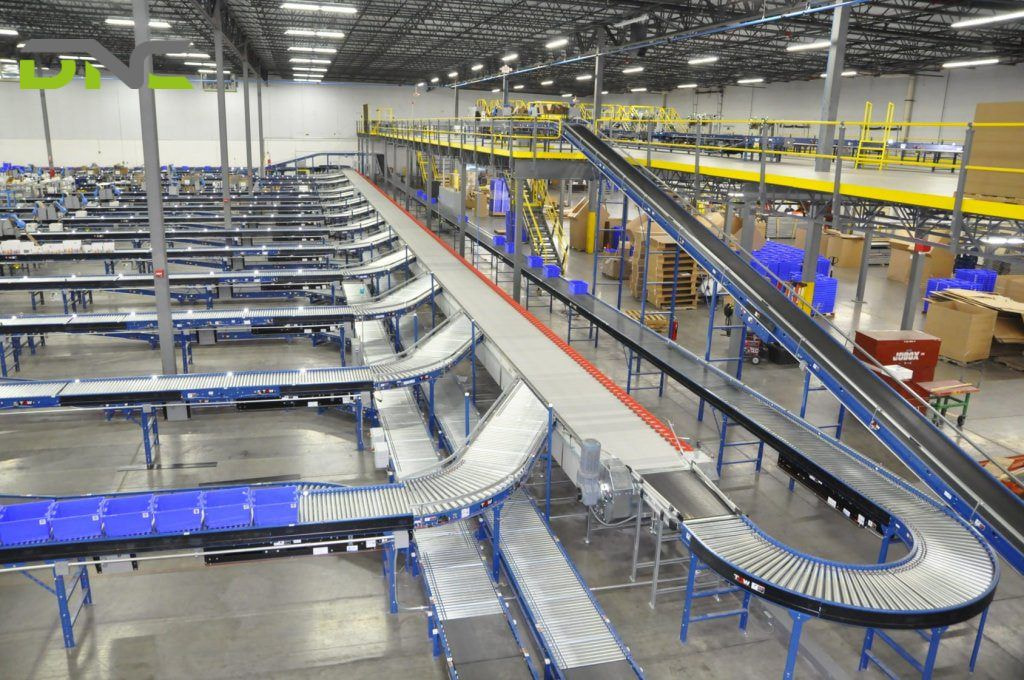
Manufacturing and distribution facilities rarely have the luxury of extra square footage. As operations grow, floor space fills with equipment, inventory, and personnel. Expanding the building footprint is expensive and sometimes impossible. When horizontal real estate runs out, the question becomes how to move materials without sacrificing production capacity or creating safety hazards.
The answer often lies above the floor rather than on it.
Evaluating Available Space
Before selecting equipment, operations managers should conduct a thorough assessment of their facility’s spatial constraints. This includes measuring clear heights beneath ceilings, roof trusses, and existing utilities. Overhead obstructions such as HVAC ducts, sprinkler systems, lighting fixtures, and electrical conduit will influence routing options. Floor-level obstacles including machinery, workstations, storage racks, and pedestrian pathways must also factor into planning.
The goal is identifying unused vertical space that could accommodate material transport without interfering with existing operations. Many facilities have 10 to 20 feet of clear height that goes completely unutilized while floor-level congestion creates bottlenecks and safety concerns.
Overhead Transport Options
A monorail conveyor moves materials along a single fixed path suspended from the ceiling or supported by floor-mounted columns. This configuration works well for point-to-point transport where products follow a consistent route between workstations, storage areas, or processing zones. Automotive assembly plants commonly use overhead systems to move components through paint booths, welding cells, and final assembly without interrupting floor-level activities.
Enclosed track systems protect the chain and trolleys from contamination, making them suitable for food processing, pharmaceutical manufacturing, and other environments where cleanliness matters. I-beam systems handle heavier loads and allow for more complex routing with switches and spurs.
The primary advantage of overhead transport is freeing floor space for value-added activities. Forklift traffic decreases when materials move above workers rather than around them. Pedestrian safety improves when transport routes are physically separated from walking paths.
Comparing Overhead and Floor-Based Systems
Not every application suits overhead transport. Conveyor systems mounted at floor level or waist height provide easier access for loading, unloading, and quality inspection. Workers can interact with products throughout the transport process without ladders or lifts. Belt conveyors, roller conveyors, and chain-driven systems each address specific product characteristics and handling requirements.
The decision between overhead and floor-based transport depends on several factors. Product weight and size determine which system configurations are feasible. A monorail conveyor handling automotive body panels requires different engineering than a gravity roller line moving small cartons. Process requirements matter as well. Operations requiring frequent human interaction with products during transport generally favor floor-level systems. Operations prioritizing point-to-point movement with minimal handling favor overhead configurations.
Facilities with mixed requirements often combine both approaches. Raw materials might arrive via floor-level conveyors, transfer to overhead systems for transport through processing areas, then return to floor level for packaging and shipping.
Integration Considerations
Adding overhead transport to an existing facility involves structural analysis. The building must support the weight of the conveyor, chain, carriers, and maximum product loads. Older buildings may require reinforcement before installation can proceed. New construction projects have the advantage of designing structural support into the building from the start.
Electrical requirements vary based on system complexity. Simple hand-push trolley systems need no power at all. Motorized conveyor systems require power drops at drive units, controls, and any automated switching or accumulation zones. Control system integration becomes important when overhead transport must coordinate with floor-level equipment, robotics, or warehouse management software.
Working with Equipment Suppliers
Facilities considering overhead transport should engage equipment suppliers early in the planning process. Experienced manufacturers can evaluate site conditions, recommend appropriate system types, and identify potential obstacles before they become expensive problems. Three-dimensional modeling allows operations managers to visualize proposed layouts and test different configurations virtually.
The supplier relationship extends beyond initial installation. Replacement parts availability, technical support, and maintenance training all affect long-term system performance. Facilities should evaluate suppliers based on their ability to support equipment throughout its operational life, not just their quoted installation price.
Planning conveyor installations for space-constrained facilities requires balancing current needs against future growth. Systems designed with expansion in mind can accommodate additional capacity without complete replacement. Modular designs allow sections to be added, removed, or reconfigured as operations evolve.













Post Comment