Transit Advertising Types India: Cab, Bus, Auto, Metro Explained
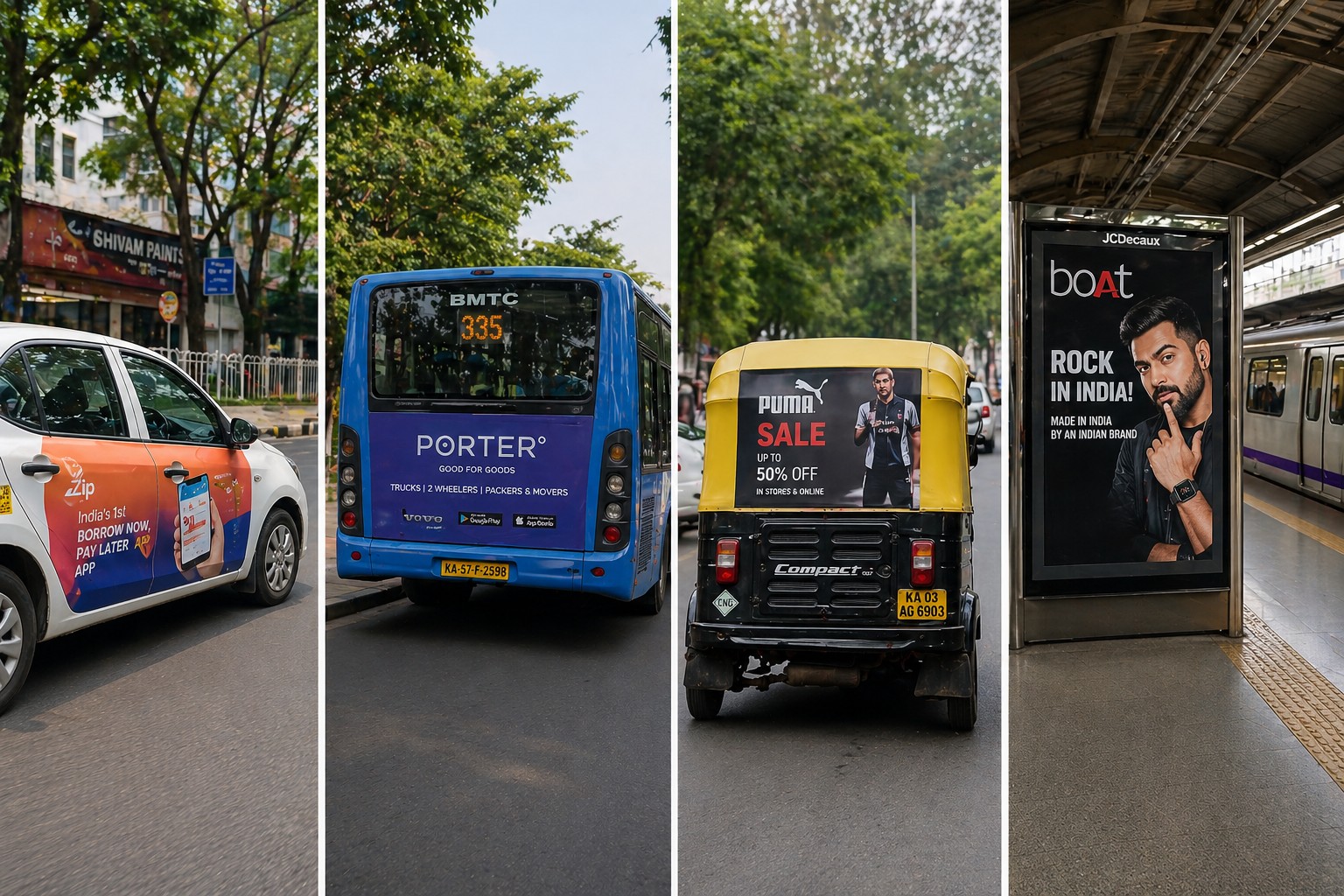
Transit advertising types India uses have grown fast over the last five years.
Cabs, buses, autos, and metro stations – each format works differently. Each reaches a different audience, and each fits a different campaign goal.
In 2023, the OOH market of India exceeded ₹3,500 crore, and transit media advertising has become one of its most rapidly growing categories.
Why? The explanation is rather obvious. The Indian cities are densely populated, while the commutes take quite a lot of time to cover.
Because of this, brands now see a strong opportunity in transit advertising types India offers today.
Here’s a clear breakdown of how each format works.
The Main Transit Advertising Types In India
Before we look at each format, let’s understand why it helps to understand why transit advertising works so well.
- First, movement is the biggest advantage. A hoarding stays in one place. However, a cab or bus moves across the city and reaches multiple areas in a single day. So, your audience is not fixed.
- In addition, dwell time plays a big role. People stuck in traffic often look around. Similarly, a commuter inside a metro coach may see the same ad for 15 – 20 minutes.
Because of this repeated exposure, brand recall improves over time. That’s why transit advertising types Indian marketers use continue to grow.
Cab Advertising India
Cab advertising in India is one of the most popular transit formats today. This is mainly because app-based cabs operate throughout the day. They pass through crucial areas and hot spots.
For instance, a campaign using 80 – 100 taxis in cities like Mumbai or Bengaluru will reach different locations on a daily basis.
Rather than using hoardings, an entire fleet will do your job.
This format works especially well for:
- Fintech brands
- D2C apps
- Real estate
- Quick commerce
Common formats include:
- Full cab wraps
- Door and boot branding
- In-cab screens or inserts
However, one important point to note: Cab advertising India delivers better results when run for at least 30 – 45 days. This allows enough time to build frequency and recall.
Bus Advertising
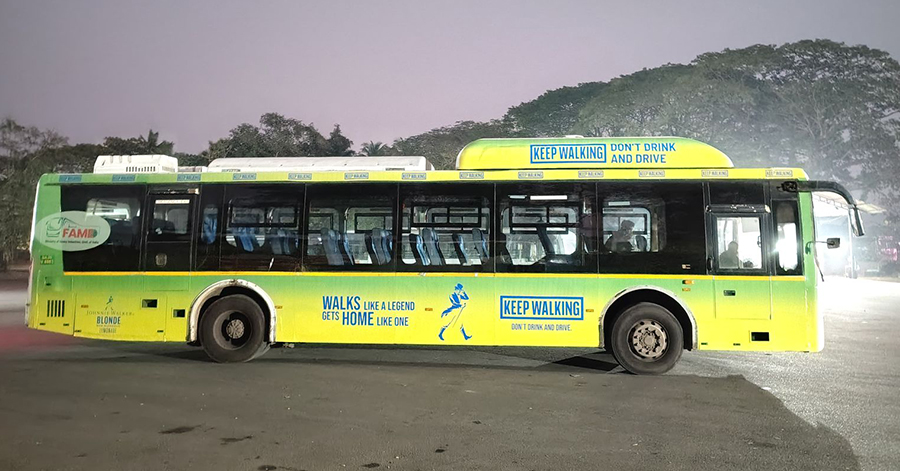
Bus advertising is not often noticed but it sure is effective.
The reason for this is the fact that the bus transport system in cities like Delhi, Mumbai, Chennai, and Bangalore transports millions of passengers daily.
Thus, there are two forms of reach here:
- Exterior ads seen by people on the road
- Interior ads seen by passengers
Passengers often spend 20 – 40 minutes inside a bus. So, your message gets more time to register.
Moreover, bus advertising works well with digital campaigns. For example, someone who sees your ad on a bus is more likely to notice your brand online later.
For mass-market brands, this is one of the most effective transit advertising types India offers.
Common formats:
- Full bus wraps
- Side and rear panels
- Interior strips
- LED displays
Auto Rickshaw Advertising India
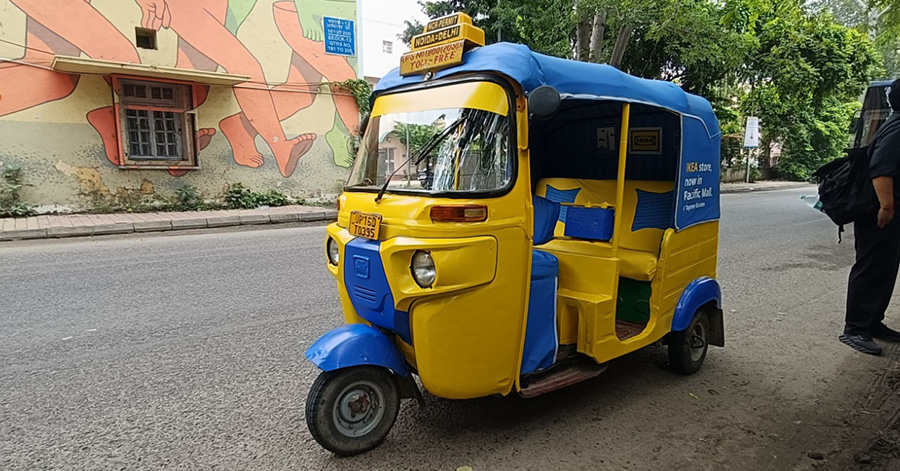
Auto rickshaw advertising in India is often underestimated. However, it offers something unique.
Autos can enter areas where buses and cabs cannot. For instance, they move through narrow streets, local markets, and residential areas.
As a result, you get strong hyperlocal reach.
Autos also move slowly and stop frequently. Because of this, people have more time to notice and read your ad.
Another key advantage is cost. Compared to other formats, auto rickshaw advertising India is more affordable. Therefore, it is ideal for local businesses and regional campaigns.
Common formats:
- Hood branding
- Back panels
- Side stickers
- Interior cards
Among all transit advertising types in India, this format works best for localized visibility.
Metro Advertising India
Metro advertising in India is an upscale transit medium. In this case, the target audience differs. Metro passengers are usually urban, well-educated, and employed individuals.
At the same time, the environment plays its role. The metro environment is orderly, clean, and contains less clutter.
But what stands out most in this media type is dwell time. Passengers frequently spend around 15-20 minutes on the metro. Throughout this period, your ad remains in view.
Thus, the level of attention increases. Some popular forms of advertising include:
- Platform panels
- Entrance/exit gates
- Advertising inside the coach
- Full train wraps
- Digital displays
Despite being quite costly, this is an extremely profitable strategy, owing to the nature of the audience and high participation.
What Type of Transit Advertising Should You Select?
The right choice depends on your campaign goal.
- Cab advertising India – city-wide reach
- Bus advertising – large-scale visibility
- Auto rickshaw advertising India – hyperlocal targeting
- Metro advertising India – premium audiences
In many cases, combining formats gives better results.
For example:
- Cabs + autos help you cover both wide and local areas
- Metro + buses combine premium positioning with mass reach
Therefore, most successful campaigns use a mix of transit advertising types in India.
Final Thoughts
Transit advertising is popular for a reason. People will be on the go no matter what.
If chosen correctly, transit advertising will help brands connect with potential consumers.
Start with one medium; then expand into more formats.
FAQs
Q1: What are the main transit advertising types India offers?
The four main formats are:
- Cab advertising India
- Bus advertising
- Auto rickshaw advertising India
- Metro advertising India
Each format serves a different purpose based on audience and budget.
Q2: Is cab advertising worth it for smaller brands?
Certainly! Cab advertising India may work even in smaller volumes. A 30 to 50-unit targeted campaign on certain routes creates excellent visibility if sustained for 30 to 45 days. It is important to choose the correct route for your target audience, not necessarily the biggest volume possible.
Q3: How budget-friendly is auto rickshaw advertising India?
Auto rickshaw advertising India is the most economical of all the transit mediums. Auto rickshaw advertising rates typically start from a few thousand rupees per month per vehicle. In contrast, a full-fledged campaign in a Tier 2 city would be much cheaper than a hoarding advertising space in the city.
Q4: Why does Metro Advertising India justify its high rates?
Metro Advertising India offers captive viewership within a high-end audience group. Passengers spend at least 20 minutes of their daily routine viewing your advertisement on platforms and within coaches.












Post Comment