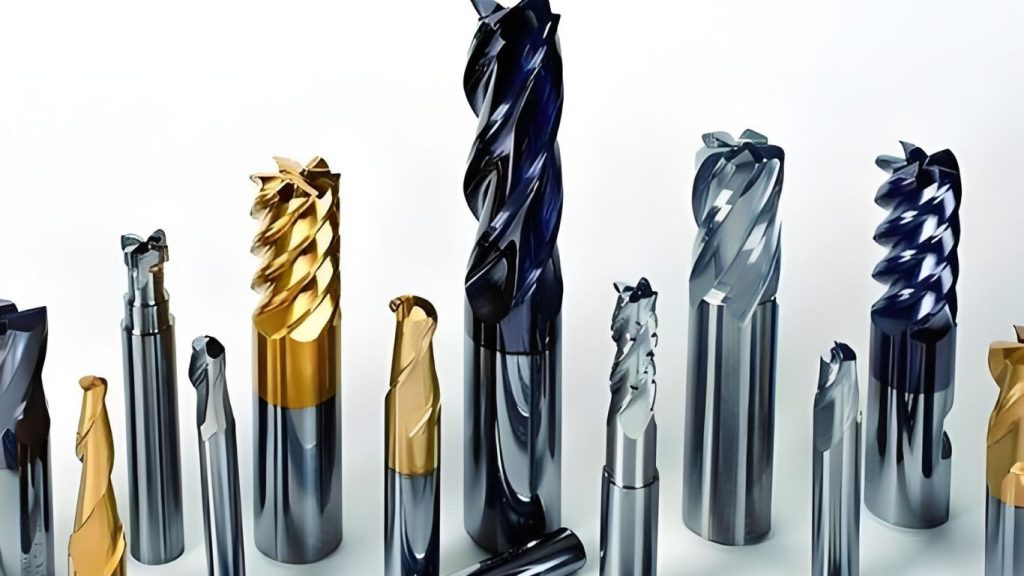

Not every part needs the most aggressive coating available. Many production components run reliably on established films at moderate cost, and the discipline of coating selection lies in knowing when the upgrade pays off and when it does not. That judgment depends on understanding how each part actually fails or wears in service, since the failure mode points directly to the coating property that matters most.
The cost of getting this decision wrong runs in both directions. Over-specifying drains margin without changing performance on parts that were already well protected. Underspecifying produces early failures on parts that actually needed something more capable from the start. Neither outcome is easily recoverable once production is running, which is why the coating conversation belongs at the engineering stage rather than the procurement stage.
Signs The Application Needs The Upgrade
Several conditions push specifications toward high-performance coatings, and none is a soft signal:
- Operating temperatures above 600°C eliminate TiN and most baseline PVD films; AlTiN, AlTiSiN, and nACO carry ceilings between 700°C and 1,200°C
- Abrasive wear from hard particles or counterfaces shortens coating life on standard films, especially across hardened materials, fiber-reinforced composites, and particulate-laden environments
- Corrosive environments degrade coatings without chemical barrier properties, including instruments cycling through autoclaves and parts exposed to bodily fluids
- Tight dimensional tolerances rule out coatings with high thickness variation, leaving only films with controlled deposition profiles
- Friction-sensitive surfaces, where small COF changes shift function, push toward coatings with stable values across the operating range
When two or more of these conditions appear together, the case for upgrade is clear before the first failure.
Where Standard Performance Coatings Are Still The Right Call
Plenty of parts run well on established, lower-cost coatings. Components operating below 600°C with steady loads in clean environments often see strong service life from standard performance coatings without the cost premium of specialty films. TiN at 2,300 HV is a defensible choice for general-purpose tooling on carbon steels at moderate speeds, and CrN handles corrosion-sensitive applications without the cost of multilayer films.
The discipline is honest evaluation. Defaults in either direction fail to match coating to load, and the wrong default produces both wasted spend and avoidable failures.
Properties To Evaluate Before Specifying
Four properties drive most coating decisions, and each filters the available options:
- Hardness sets resistance to abrasion, indentation, and surface deformation; industrial PVD films range from roughly 1,800 HV to 4,500 HV
- Coefficient of friction governs sliding behavior, heat generation, and lubrication needs; DLC sits at the low end with COF 0.05 to 0.1, while standard PVD films run higher
- Thickness affects fit and dimensional accuracy on tight-tolerance parts; most industrial PVD coatings deposit between 1 and 5 microns
- Maximum operating temperature defines where the coating loses protective properties: roughly 300°C for DLC, 600°C for TiN, 700°C for AlTiN, 1,200°C for AlTiSiN and nACO
Comparing these properties against actual operating conditions produces a defensible specification rather than a guess.
Industry Examples
The pattern repeats across sectors. Aerospace and defense parts often live at the high end of temperature and qualification, where high-performance coatings earn their place. Medical instruments require cleanliness and biocompatibility, narrowing the candidate list early. Motorsports and high-performance sports equipment face short, intense loads where surface durability separates a finish from a failure.
Firearms components live with corrosion, friction, and heat together, while precision instruments need stable thickness across long production runs. Each industry calls a different coating, and the right answer is rarely the most expensive.
When The Upgrade Pays Off
The economic case is straightforward when the math is honest. If a specialty coating extends component life from 1,000 to 5,000 cycles, cost per cycle drops by 80 percent. If it fails at 1,200 cycles because substrate or operating conditions were not properly evaluated, the upgrade was wasted.
The decision turns on data. Documented operating conditions, measured failure modes, and accurate substrate information turn the specification into an engineering calculation rather than a guess.
Conclusion
The choice between standard performance coatings and upgraded specialty films depends on the part, the load, the environment, and the production economics around them. Working through hardness, friction, thickness, and temperature against actual operating conditions produces specifications that protect parts that need it and preserve budget on parts that do not.