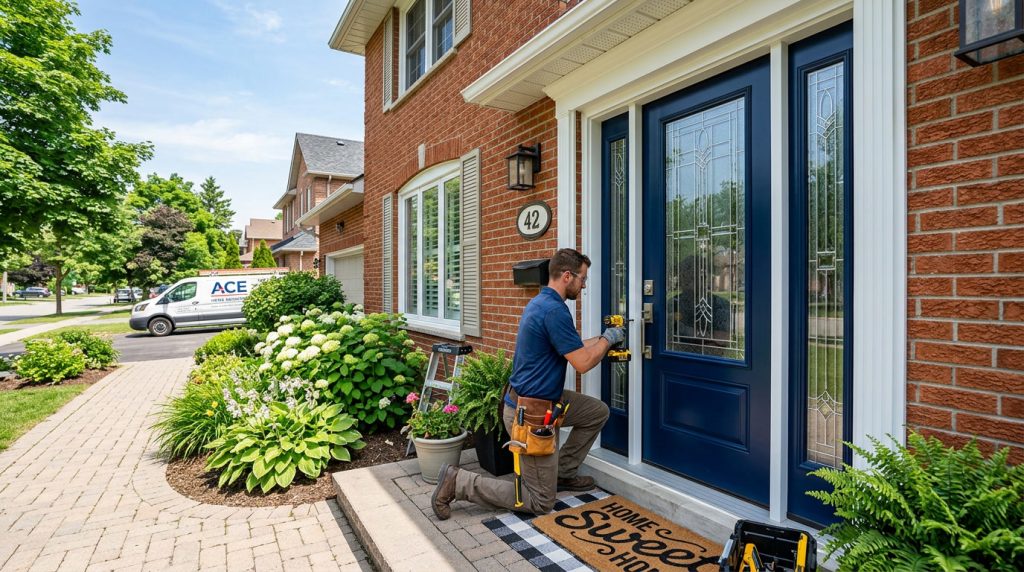

Picture this: a potential buyer pulls up to your home for the first time. Before they step inside, before they see your renovated kitchen or your beautiful hardwood floors, they see your front door. That single element, more than almost anything else on your home’s exterior, shapes their very first impression of the entire property.
Your entry door is not just a door. It is a statement. It is a security barrier. It is a thermal envelope that separates your comfortable indoor climate from the unpredictable outdoor elements. And if your current door is faded, drafty, warped, or simply no longer representing the home you have worked so hard to build, it might be time for a change.
At Warrior Windows Inc., we have transformed thousands of entryways across the region, and we want to share everything we know about installing a new entry door the right way. Whether you are a confident do-it-yourselfer or simply want to understand the process before hiring a professional, this guide covers every step from start to finish.
What Makes Your Entry Door So Important?
Many homeowners think of a door replacement as a purely cosmetic upgrade. In reality, your entry door plays several critical roles in the overall performance and value of your home.
Your Door Is Your Home’s First Line of Defense
A quality entry door equipped with modern locking systems, reinforced frames, and impact-resistant materials is one of your home’s most important security features. Older doors with worn frames, loose hardware, or outdated locks are significantly easier for intruders to breach. Upgrading to a modern entry door immediately strengthens your home’s security posture.
Your Door Directly Impacts Your Energy Bills
Did you know that air leakage around doors and windows accounts for a significant portion of a typical home’s energy loss? An aging door with deteriorating weatherstripping, gaps around the frame, or poorly insulating glass panels can quietly drain hundreds of dollars from your household budget every single year. A new, properly installed energy-efficient entry door seals those leaks and keeps your heating and cooling costs in check.
Your Door Sets the Tone for Your Entire Home
Interior designers often talk about the importance of “flow” and “first impressions” when staging a home. Your entry door is the opening statement of your home’s visual story. A bold, well-chosen door color can make a modest home look stunning. A sleek, modern design can elevate a traditional exterior. The right door, in the right style, sends exactly the message you want to send about the people who live inside.
Your Door Is a Smart Financial Investment
The numbers do not lie. Replacing an entry door consistently ranks among the top home improvement projects for return on investment. Industry data suggests that a new steel entry door, for example, can recoup a remarkable percentage of its cost in added home value. In a competitive real estate market, a beautiful, secure, energy-efficient entry door can be the difference between a quick sale at full price and a home that sits on the market.
Planning Your Entry Door Installation
Step 1: Assess Your Current Situation
Before you start shopping for a new door, take some time to honestly assess the condition of your existing door and its surrounding frame. Ask yourself these questions:
Is the door itself the problem, or is it the frame?
Sometimes a door that sticks, drafts, or looks worn is actually in decent shape itself. The real culprit may be a warped or settled door frame. Conversely, a beautifully maintained frame can still support a door that has simply reached the end of its useful life. Understanding which component needs replacing (or whether both do) will guide your purchasing decision.
Are there signs of water damage or rot?
Check around the door frame, the threshold area, and the bottom of the door itself for soft spots, discoloration, or visible rot. Water infiltration is a serious issue that can spread beyond the door into the surrounding wall structure if not addressed properly.
Is the door performing adequately from a security standpoint?
Test your door’s locks, hinges, and frame. Do the locks engage smoothly and completely? Are the hinges tight and solid? Does the frame feel solid when you push against it from the outside? If anything feels weak or compromised, security should be a top priority in your replacement decision.
What is your primary motivation for replacing the door?
Understanding your “why” will help you focus your budget and choices on what matters most. If energy efficiency is your primary concern, your selection process will look different than if you are primarily motivated by aesthetics or security.
Step 2: Choose the Perfect Door for Your Home
The door market today offers an almost overwhelming array of options. Here is a breakdown of the major categories to help you make an informed decision.
Exploring Your Material Options
The Case for Fiberglass
If you could design the perfect entry door material from scratch, you might end up very close to fiberglass. It combines the visual warmth and richness of wood grain texture with the weather resistance of a synthetic material. Fiberglass doors do not warp when humidity changes, do not crack in extreme cold, and do not rot when exposed to moisture. They accept paint and stain beautifully and are available in virtually every style imaginable. For most homeowners seeking a balance of performance, aesthetics, and low maintenance, fiberglass is an outstanding choice.
The Case for Steel
If security and value are your primary considerations, steel deserves serious attention. Steel entry doors are inherently strong and resistant to forced entry in ways that wood and even fiberglass simply cannot match. They are also typically the most affordable option among quality entry door materials. Modern steel doors are heavily insulated with polyurethane foam cores, making them surprisingly energy-efficient as well. The main tradeoffs are that steel can dent if struck hard enough and may be vulnerable to rust in very humid coastal environments if not properly maintained.
The Case for Wood
There is something irreplaceable about a solid wood entry door. The weight, the warmth, the handcrafted look, and the sheer variety of species, profiles, and finishes available make wood a perennial favorite among design-conscious homeowners. A well-maintained solid wood door is genuinely beautiful in a way that no synthetic material has fully replicated. However, that beauty comes with a responsibility. Wood doors require regular painting or staining, careful attention to sealing, and prompt repairs when damage occurs. In regions with extreme weather swings, wood requires extra vigilance.
Understanding Style and Configuration Options
Beyond material, you will need to consider the overall configuration of your new door system. Options include:
Single Door: The most common configuration, a single solid panel door. Clean, classic, and available in virtually every style and material.
Door with Sidelights: Narrow vertical windows flanking one or both sides of the door. Sidelights dramatically increase natural light in the entryway and add a sense of grandeur and openness.
Door with Transom: A horizontal window above the door. Transoms are a classic architectural element that adds height, light, and elegance to an entryway.
Double Door (French Entry): Two full panels that open from the center. An impressive, high-end option for wider openings or homes with a grand design aesthetic.
Door with Full Surround: A combination of sidelights and transom that fully frames the door with glass. The most dramatic and light-filled option, creating a truly spectacular entryway.
Glass Panel Considerations
If your door design includes glass panels, you will need to balance several considerations:
- Privacy: How visible is your entryway from the street? Decorative, frosted, or textured glass provides light without transparency.
- Security: Glass panels within reach of the door handle can potentially be broken to allow access to the lock. Laminated safety glass or decorative glass positioned away from hardware mitigates this risk.
- Energy Performance: Look for glass with low-E coatings and argon gas fills for the best thermal performance.
- Style: Glass panel designs range from simple clear lites to elaborate decorative patterns in virtually any style from traditional to ultra-modern.
Step 3: Take Accurate Measurements
One of the most critical and most commonly botched steps in entry door selection is taking accurate measurements of the existing opening. An improperly measured opening leads to doors that do not fit, which means costly returns, delays, and installation headaches.
Here is how to measure correctly:
Width: Measure the width of the existing door slab itself (not the frame) at three points: top, middle, and bottom. Use the smallest of the three measurements. Standard widths are 30, 32, 34, and 36 inches, with 36 inches being most common for main entry doors.
Height: Measure the height of the door slab from top to bottom. Standard height is 80 inches (6 feet 8 inches), though 96-inch (8-foot) doors are increasingly popular in newer construction.
Thickness: Measure the thickness of the existing door slab. Most exterior doors are 1¾ inches thick.
Rough Opening: If you are purchasing a pre-hung door unit, you will also need the dimensions of the rough opening (the framed opening in the wall). This is typically 2 inches wider and 2 inches taller than the door slab to allow for the frame and shimming.
Important Note: If your home is older, do not assume your opening is a standard size. Many older homes have non-standard openings that will require a custom-sized door or modifications to the rough opening.
Gathering What You Need
Step 4: Build Your Toolkit
A successful door installation requires the right tools. Here is everything you should have on hand before you begin:
Measurement and Layout Tools:
- Tape measure (25-foot minimum)
- 4-foot level (this length is essential for checking plumb and level accurately)
- Speed square
- Pencil and marking tape
Removal Tools:
- Pry bar (flat and curved)
- Hammer
- Reciprocating saw or handsaw
- Utility knife with fresh blades
- Nail puller
Installation Tools:
- Cordless drill with multiple bit sizes
- Screwdriver set (flathead and Phillips)
- Caulking gun
- Foam gun (for precise application of expanding foam)
- Miter saw (for cutting trim)
- Nail gun or hammer and finishing nails
Safety Equipment:
- Safety glasses
- Work gloves
- Knee pads
- Steel-toed boots
Materials Checklist:
- Pre-hung entry door unit
- Cedar or composite shims (multiple packs)
- Low-expansion spray foam insulation
- Paintable exterior caulk (high-quality, weatherproof)
- 3-inch exterior screws
- Finishing nails
- Weatherstripping (if not included with door)
- Wood filler or putty
- Exterior primer and paint (if door requires finishing)
- Replacement threshold seal (if needed)
The Installation Process
Step 5: Remove the Existing Door and Frame
Removing the old door is more than just yanking it out of the wall. Done properly, this step sets the stage for a clean, accurate installation. Rushed or careless removal can damage surrounding surfaces and create extra work.
5.1 Protect Your Work Area
Before starting any demolition work, lay drop cloths on the interior floor to protect your flooring from debris, tools, and scuffs. If you have furniture near the entryway, move it back to give yourself plenty of working room.
5.2 Take the Door Off Its Hinges
Open the door to a 90-degree angle for the best access to the hinge pins. Starting with the bottom hinge, insert a flathead screwdriver beneath the hinge pin head and tap the handle of the screwdriver upward with a hammer to drive the pin up and out. Repeat for each hinge. With all pins removed, you will need at least one helper to safely lift and carry the door away from the opening.
5.3 Score and Remove the Trim
Using a fresh utility knife blade, carefully score along the painted or caulked edges of both the interior and exterior door casing (trim). This scoring cut prevents the paint from peeling or the drywall from tearing as you pry the trim away. Work the pry bar behind the trim gently and work your way around the entire perimeter, removing each piece in manageable sections.
5.4 Extract the Old Frame
With the trim removed, you now have direct access to the door jamb assembly. Look for the fasteners (nails or screws) that are securing the frame to the rough framing. Remove or cut these fasteners and work the frame out of the opening. In older homes, the frame may be heavily caulked, painted over multiple times, or shimmed in complex ways. Take your time and work methodically.
5.5 Inspect and Repair the Rough Opening
This is your golden opportunity. With the old door system completely removed, you have full visibility into the condition of the rough opening and the surrounding wall structure. This is not a step to rush through.
Look carefully for:
- Rot or soft wood: Press on all wood surfaces with a screwdriver or awl. Solid, healthy wood will resist the pressure. Soft, rotted wood will give way easily. Any rotted material must be cut out and replaced with pressure-treated lumber before proceeding.
- Water staining: Discoloration on the wood or surrounding drywall indicates past or present water infiltration. Find and address the source before installing the new door.
- Structural integrity: Make sure the king studs, jack studs, and header above the opening are solid, properly sized, and free of damage.
- Level and plumb: Use your 4-foot level to check the sill (bottom of the opening) for level and the jack studs on each side for plumb. Note any significant discrepancies that will need to be shimmed out during installation.
Step 6: Prepare the Opening for the New Door
6.1 Clean Up the Opening
Remove all old nails, screws, staples, and caulk residue from the rough opening surfaces. The cleaner and smoother the opening surfaces are, the easier it will be to properly fit and shim the new door.
6.2 Apply Flashing Tape
One step that many DIYers skip but professionals never do: apply self-adhesive flashing tape along the sill of the rough opening and up each side. Flashing tape creates a waterproof barrier that protects the rough opening from any water that might find its way past the exterior caulk or weatherstripping over the years. This small investment of time and material can prevent serious water damage for decades to come.
6.3 Apply a Sill Bed of Caulk
Run a generous, continuous bead of high-quality exterior caulk across the sill area where the bottom of the door frame will rest. This bead of caulk creates an additional moisture barrier and helps the door frame seat firmly against the sill.
Step 7: Set and Secure the New Door Unit
This is the heart of the entire project. Everything that comes before this step is preparation, and everything that comes after is finishing. The quality of what happens in this step determines how well your door performs for the next several decades.
7.1 Position the Door Unit in the Opening
With at least one helper (two is better for heavier door units), carefully tilt the pre-hung door unit into the rough opening from the exterior side of the house. The door should swing into the interior of the home when opened. Set the bottom of the frame down onto the caulked sill and center the unit within the opening.
Make sure the exterior casing (brickmold) is pressed firmly and evenly against the exterior wall surface. Check that there are no significant gaps between the brickmold and the siding or masonry.
7.2 Tack the Unit in Place Temporarily
Before doing any final securing, drive just one or two nails or screws partially into the top corners of the exterior casing to hold the door unit in position while you check your levels. Do not drive them fully yet.
7.3 Check Level, Plumb, and Square — Thoroughly
This is where many DIY installations go wrong. People check level once, think it looks good, and move on. Professional installers check level and plumb multiple times from multiple locations during the installation process.
Check the following:
- Sill/threshold: Is it perfectly level from left to right? Place your level directly on the threshold and check carefully.
- Hinge-side jamb: Is it perfectly plumb (vertically straight) from top to bottom? Check with your level on the face of the jamb.
- Latch-side jamb: Same check on the opposite side.
- Head jamb: Is the top of the frame level?
- Diagonal measurements: Measure diagonally from the top hinge corner to the bottom latch corner, then from the top latch corner to the bottom hinge corner. If these measurements are equal, the frame is square. If they differ, the frame is racked and needs adjustment.
Use shims placed between the door frame and the rough framing to make all necessary adjustments. Add shims in pairs from opposite sides for even pressure without distorting the frame.
7.4 Secure the Hinge Side Permanently
Once you are satisfied that everything is level, plumb, and square, begin permanently securing the hinge side of the frame. Drive 3-inch exterior screws through the frame, through the shims, and solidly into the jack stud or king stud of the rough framing. Place fasteners at each shim location and add additional fasteners near each hinge location for maximum strength.
After driving each screw, recheck your plumb. It is normal for things to shift slightly as fasteners are tightened.
7.5 Secure the Latch Side and Head
With the hinge side solidly anchored, move to the latch side and repeat the process. Add shims and fasteners at several points along the latch side jamb. Finally, secure the head jamb at the top.
7.6 Test the Door Operation
Before going any further, open and close the door several times. It should swing freely, smoothly, and silently. The latch should engage cleanly with the strike plate. The door should feel solid and balanced in all positions. If anything feels off, now is the time to make adjustments before you proceed to the finishing steps.
7.7 Secure the Exterior Casing
Complete the exterior securing by driving galvanized casing nails or screws through the exterior brickmold into the wall framing at regular intervals. Set the nail heads slightly below the surface so they can be filled and painted over.
Step 8: Insulate, Seal, and Weatherproof
A door that is perfectly installed from a structural standpoint but poorly sealed is still a problem. Proper insulation and sealing are what transform a functional door installation into a truly high-performance one.
8.1 Apply Expanding Foam Insulation
Fill the gaps between the door frame and the rough opening on all sides with low-expansion spray foam insulation. The word “low-expansion” is important here. Standard high-expansion foam can generate enough pressure as it cures to actually bow the door jambs inward, which will cause the door to bind and not operate properly.
Apply the foam in a continuous bead, filling each gap to roughly 50% capacity. The foam will expand to fill the rest. Allow it to cure fully (typically a few hours) and then trim any excess with a utility knife.
8.2 Verify and Adjust Weatherstripping
Your new pre-hung door unit should have come with weatherstripping already installed around the door stop on the head jamb and both side jambs. Press the door closed and check the compression of the weatherstripping around the entire perimeter. You should feel gentle, consistent resistance from the weatherstripping as the door closes. If you see gaps or feel no resistance in certain areas, the weatherstripping may need to be adjusted or replaced.
8.3 Check and Seal the Threshold
The bottom of the door is often the most vulnerable point for both air infiltration and water intrusion. Most modern entry door thresholds are adjustable, with a raising and lowering mechanism that lets you fine-tune the seal between the door bottom and the threshold surface. Adjust the threshold so that the door sweeps across it with slight resistance, creating a solid seal without making the door difficult to open and close.
8.4 Caulk All Exterior Joints
Apply a neat, continuous bead of paintable exterior caulk to every joint between the door system and the house exterior:
- Along both sides where the brickmold meets the siding or masonry
- Along the top where the head casing meets the siding
- Around any glass panel frames or sidelights
Tool the caulk smooth with a wet finger or caulk finishing tool. Exterior caulk is your last line of defense against water infiltration, so do not rush this step or leave any gaps.
Step 9: Install Door Hardware
9.1 Install the Lockset and Deadbolt
Most modern pre-hung doors arrive with the bore holes (the cylindrical holes drilled for the lockset and deadbolt) already cut. Simply follow the instructions included with your chosen hardware to install the lock cylinder, interior and exterior handles or knobs, and the latch mechanism.
Pay particular attention to the strike plate installation. The strike plate must be perfectly aligned with the latch and deadbolt so that both engage fully and smoothly with the door closed. A misaligned strike plate leads to a door that is difficult to lock or that feels loose when closed.
For added security, use the long screws included with most modern deadbolt kits to anchor the strike plate all the way through the door jamb and into the solid framing of the rough opening behind it. This single step dramatically increases the resistance of the door to forced entry.
9.2 Install Door Hinges (if Replacing)
If your installation required removing and replacing the hinges, install them now according to the manufacturer’s specifications. For exterior doors, use heavy-duty hinges rated for exterior use and, for added security, consider installing security-tip hinges that prevent the door from being removed even if the hinge pins are driven out.
9.3 Add a Door Knocker, Viewer, or Additional Accessories
Now is the ideal time to install any additional door hardware you have chosen, such as a door knocker, a wide-angle peephole viewer, a door bell button, house numbers, or a mail slot. Plan the placement of these accessories carefully before drilling any holes to ensure a balanced, intentional look.
Step 10: Complete the Interior and Exterior Finishing
10.1 Install Interior Door Casing
Measure, cut, and install your chosen interior door trim (casing) around the interior perimeter of the door frame. Most interior door casing is installed with mitered corners at the top and square (butt) joints at the bottom where the casing meets the floor or baseboard.
Use a miter saw to cut precise 45-degree angles on the top corners of the side casings and the ends of the head casing. Nail the trim in place with finishing nails, set the nail heads below the surface with a nail set, and fill the holes with wood filler. Sand smooth when dry.
10.2 Paint or Stain the Door
If your new door requires a painted or stained finish (as opposed to a factory-finished door that arrives ready to install), complete this step before hanging any additional hardware or accessories.
Proper preparation is essential for a durable paint finish on an exterior door. Begin with a coat of high-quality exterior primer on all surfaces, including the top and bottom edges of the door slab, which are often overlooked but are critical for preventing moisture absorption and swelling. Follow with at least two coats of 100% acrylic exterior paint in your chosen color, allowing each coat to dry fully before applying the next.
If you are staining a wood or fiberglass door, use a product specifically formulated for exterior wood or fiberglass, and follow the manufacturer’s instructions carefully for application and topcoat sealing.
10.3 Touch Up the Exterior
Touch up any nail holes in the exterior casing with exterior wood filler, sand smooth, and apply matching paint. Clean up any caulk smears or construction debris from the exterior wall surfaces.
Step 11: Final Inspection and Quality Check
Never consider an installation complete until you have done a thorough final inspection. Here is your final checklist:
Operation:
- Door opens and closes smoothly without binding or sticking
- Door does not swing open or closed on its own when released at any angle
- All hinges are tight and show no signs of movement
- Latch engages and disengages smoothly
- Deadbolt extends and retracts completely without difficulty
- All locks operate smoothly from both interior and exterior
Weatherproofing:
- Weatherstripping makes consistent contact around the entire door perimeter
- Threshold seal is properly adjusted and creates a seal at the bottom
- All exterior caulk joints are complete, smooth, and unbroken
- No visible daylight is visible around the door perimeter from the inside
Appearance:
- Interior and exterior trim is properly installed and finished
- All nail holes are filled and painted
- Door finish is complete and even on all surfaces including edges
- Hardware is properly installed, tight, and aligned
- Work area is clean and all debris is removed
The Most Common Entry Door Installation Mistakes (And How to Avoid Them)
Learning from others’ mistakes is always wiser than making your own. Here are the errors that come up most frequently in entry door installations:
Mistake #1: Neglecting the Rough Opening Inspection
Many homeowners are so eager to get the new door in that they skip a thorough inspection of the rough opening after removing the old door. Hidden rot, water damage, or structural issues that are not addressed before installation will inevitably cause serious problems down the road. Always inspect thoroughly and repair completely before proceeding.
Mistake #2: Working Alone on a Heavy Door Unit
Entry door units, especially those with sidelights or solid wood construction, can be extremely heavy and unwieldy. Attempting to install one without adequate help is not just difficult. It is dangerous. The door unit can fall, causing serious injury, or it can be set improperly in the opening because one person simply cannot hold it in position and check level at the same time. Always have at least one capable helper for this part of the project.
Mistake #3: Checking Level Only Once
Level and plumb must be verified at multiple stages throughout the installation, not just once at the beginning. As you drive fasteners, things shift. As the foam cures, things move slightly. As the threshold is adjusted, the door’s behavior changes. Check your levels repeatedly throughout the process.
Mistake #4: Using High-Expansion Foam
Using standard high-expansion spray foam rather than low-expansion foam for door frames is a mistake that ruins many otherwise good installations. The pressure generated by expanding foam can bow door jambs inward, causing the door to bind and not close properly. Always use products specifically labeled for use around windows and doors.
Mistake #5: Rushing the Caulking and Sealing
Proper sealing is not glamorous work, but it is critically important. Homeowners who rush through or skip caulking steps end up with doors that let in drafts, allow moisture infiltration, and require premature replacement of surrounding materials. Take the time to caulk thoroughly and neatly.
Mistake #6: Ignoring the Door Edges When Painting
The top and bottom edges of a door are the surfaces most vulnerable to moisture absorption, yet they are the ones most commonly skipped during the painting process. An unsealed door edge allows water to wick into the door core, leading to swelling, warping, and eventual delamination. Always seal every surface, including the edges.
Knowing When to Call the Professionals
There is no shame in recognizing the limits of what you can comfortably and safely tackle on your own. Some door installation scenarios genuinely call for professional expertise:
Situations that warrant calling a pro:
- Significant structural damage discovered in the rough opening or surrounding wall
- Non-standard or historically significant opening dimensions
- Installation of very large, heavy, or highly customized door systems
- Homes with brick, stone, or stucco exteriors where the exterior trim integration is complex
- Any situation where you feel unsure or unsafe at any point in the process
Calling a professional is not admitting defeat. It is making a smart decision to protect your investment, your home, and your safety. A quality professional installation also typically comes with a labor warranty that provides peace of mind that a DIY project simply cannot offer.
How Warrior Windows Inc. Makes Entry Door Installation Effortless
At Warrior Windows Inc., we have built our reputation on one simple principle: we treat every home we work in as if it were our own. That means we do not cut corners, we do not rush through critical steps, and we do not leave until the job is done right and you are completely satisfied.
Here is what sets us apart:
Unmatched Product Selection
We partner with the industry’s most respected door manufacturers to offer our customers an exceptional range of entry door options. Whatever your style, budget, or performance requirements, we have a door that fits perfectly.
Expert Consultation
Not sure which door is right for your home? Our experienced consultants will visit your home, assess your needs, and provide honest, informed recommendations without any high-pressure sales tactics.
Precision Installation
Every Warrior Windows Inc. installer is factory-trained and follows a rigorous installation protocol on every single project. We do not have “good” installations and “average” installations. We only do excellent installations.
Comprehensive Cleanup
We believe that the job is not done until your home looks better than it did when we arrived. That means complete cleanup of all construction debris, removal of the old door and packaging materials, and a final walkthrough with you to confirm your complete satisfaction.
Industry-Leading Warranties
We stand behind our work with comprehensive warranties on both our products and our installation labor. If anything is not right, we will make it right. Period.
Transparent Pricing
We provide detailed, written estimates before any work begins. The price we quote is the price you pay. No surprises, no hidden fees, no last-minute add-ons.
Frequently Asked Questions About Entry Door Installation
How long does a professional entry door installation typically take?
Most single entry door installations can be completed by an experienced professional team in three to five hours. More complex installations involving sidelights, transoms, or significant rough opening repairs may take a full day or more.
Do I need a permit to replace my entry door?
In most jurisdictions, replacing an existing entry door with a same-size unit does not require a permit. However, if you are changing the size of the opening or making structural modifications, a permit is typically required. Check with your local building department before beginning the project.
Can I install a new entry door without replacing the frame?
Sometimes, yes. If the existing frame is in excellent condition, properly squared, and free of damage, it may be possible to replace just the door slab. However, this requires precise matching of the new slab to the existing frame dimensions and is generally less straightforward than installing a complete pre-hung unit.
How often should an entry door be replaced?
A quality entry door that is properly installed and maintained should last 30 years or more. Signs that it may be time for replacement include visible damage or rot, persistent drafts despite new weatherstripping, difficulty operating the door, significantly outdated security features, or simply an appearance that no longer suits your home.
What is the best color for a front door?
While this is ultimately a matter of personal taste and architectural context, some of the most consistently popular and impactful front door colors include classic black, navy blue, forest green, rich red, and bright white. Bold colors work best when they complement, rather than clash with, the existing exterior palette of the home.
Conclusion: Your Front Door Deserves the Best
Your entry door is more than a functional necessity. It is the handshake your home offers to everyone who approaches it. It is a daily reminder of the safety, comfort, and beauty that define your living space. And when it is time to replace it, doing the job right makes all the difference between a door that simply functions and a door that truly transforms.
Whether you are ready to roll up your sleeves and tackle this project yourself, or you would prefer to let experienced professionals handle every detail, the information in this guide gives you everything you need to make smart, confident decisions.
When you are ready to take the next step, the team at Warrior Windows Inc. is here to help. From initial consultation to final cleanup, we are committed to making your entry door installation an experience you will feel great about for years to come.
Contact Warrior Windows Inc. today for your free, no-obligation consultation and estimate. Let us help you make the best first impression your home has ever made.