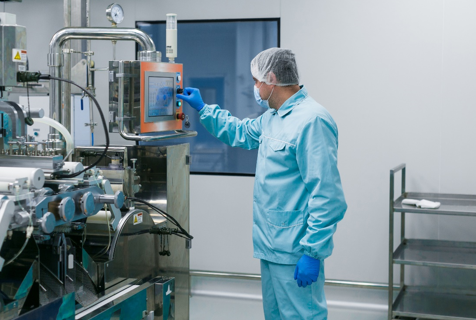

What is GMP Certification?
Good Manufacturing Practice (GMP) certification is a globally recognized system that ensures products are consistently produced and controlled according to quality standards. In particular, it plays a vital role in the pharmaceutical industry, where even a small error can impact patient health. Therefore, GMP provides a structured framework that governs every stage of production, from raw material sourcing to final product distribution.
Moreover, pharmaceutical manufacturers rely on GMP guidelines to minimize risks involved in production. Since these risks cannot be eliminated through final product testing alone, GMP focuses on building quality directly into the process. As a result, safety, efficacy, and consistency are maintained across all batches.
In addition, GMP certification reflects a company’s commitment to maintaining high standards. It demonstrates that manufacturing processes are well-defined, controlled, and regularly monitored. Consequently, regulatory authorities recognize GMP as a benchmark for pharmaceutical quality.
Why Quality and Safety Matter in Pharmaceuticals
Quality and safety are the foundation of pharmaceutical manufacturing. After all, medicines are designed to improve health, but poor-quality products can cause serious harm. For instance, slight variations in formulation or contamination can lead to severe consequences.
Furthermore, patients depend on medications to be safe and effective. At the same time, healthcare professionals rely on consistency when prescribing treatments. If a drug fails to meet expectations, it can undermine trust in the healthcare system.
Thus, pharmaceutical companies must implement strict quality control measures. In this context, GMP certification provides a reliable system to achieve this goal. Ultimately, it ensures that every product meets predefined specifications.
How GMP Certification Establishes Standardized Processes
To begin with, GMP certification requires manufacturers to follow standardized procedures. These procedures cover all aspects of production, including equipment usage, staff responsibilities, and quality checks. As a result, variability is significantly reduced.
Additionally, clear documentation plays a key role in this process. Every step must be recorded accurately, ensuring traceability and accountability. If an issue arises, then identifying the root cause becomes much easier.
Equally important, standard operating procedures (SOPs) provide detailed instructions for performing tasks. Employees are trained to follow these procedures strictly. Consequently, errors are minimized and consistency is improved.
Role of GMP in Preventing Contamination
Contamination is one of the biggest risks in pharmaceutical manufacturing. It can occur at multiple stages of production. For example, sources may include raw materials, equipment, or even human handling.
To address this, GMP certification introduces strict hygiene and sanitation protocols. Manufacturing areas are designed to prevent cross-contamination. In addition, controlled environments and cleanroom practices are implemented.
Moreover, personnel hygiene is equally important. Workers must follow strict guidelines, such as wearing protective clothing. Regular health checks further reduce contamination risks.
Likewise, cleaning and maintenance procedures are standardized. Equipment must be cleaned thoroughly between cycles. Therefore, the risk of contamination is significantly reduced.
Ensuring Consistency Through GMP Guidelines
Consistency is essential in pharmaceutical production. In other words, every batch must deliver the same results. Otherwise, variations can affect both safety and effectiveness.
GMP certification ensures that processes remain consistent over time. For instance, it requires validation of manufacturing methods. This confirms that processes produce reliable outcomes.
Additionally, raw materials are carefully controlled. Suppliers must meet strict quality standards. Before use, incoming materials are tested to ensure quality.
Furthermore, in-process checks enhance consistency. Samples are tested at different stages. As a result, issues can be detected and corrected early.
Importance of Documentation in GMP Compliance
Documentation is a central element of GMP certification. Without proper records, maintaining quality becomes difficult. Therefore, every manufacturing activity must be documented.
For example, batch records include details about materials, equipment, and results. These records ensure full traceability. In case of an issue, manufacturers can track every step.
Similarly, deviation reports are essential. If something goes wrong, it must be documented and investigated. Then, corrective actions are implemented.
In conclusion, well-maintained documentation supports audits and inspections. It proves that GMP guidelines are followed consistently.
Role of Training and Personnel Competence
Human error is a major factor in manufacturing defects. Hence, GMP certification emphasizes proper training. Employees must clearly understand their roles.
To achieve this, training programs educate staff about GMP principles. Workers learn about hygiene, equipment handling, and documentation. Moreover, regular refresher sessions keep knowledge updated.
In addition, supervision ensures compliance. Experienced personnel monitor operations closely. As a result, potential issues are identified early.
Ultimately, a well-trained workforce plays a crucial role in maintaining quality and safety.
Equipment and Facility Requirements Under GMP
GMP certification sets strict standards for equipment and facilities. First of all, manufacturing environments must prevent contamination. At the same time, they should support efficiency.
For instance, equipment must be suitable and easy to maintain. Regular calibration ensures accurate performance. Without this, product quality may be affected.
Likewise, facility design is important. Proper layout minimizes cross-contamination risks. Different production areas are clearly separated.
Furthermore, environmental controls are essential. Temperature, humidity, and air quality must be monitored continuously. Consequently, product integrity is preserved.
Quality Control and Testing in GMP
Quality control is an integral part of GMP certification. It involves testing products at various stages. This ensures compliance with predefined standards.
In particular, laboratories must follow strict procedures. Testing methods should be validated for accuracy. Then, results are recorded and reviewed carefully.
Before release, finished products undergo final testing. Only those meeting all criteria are approved. Therefore, defective products are prevented from reaching consumers.
Additionally, stability testing determines how products behave over time. This helps establish shelf life and storage conditions.
Risk Management in GMP Practices
Risk management is a key component of GMP certification. It focuses on identifying and controlling potential risks. Without it, maintaining quality becomes challenging.
To begin with, manufacturers conduct regular risk assessments. These evaluations identify potential hazards. Then, preventive measures are implemented.
Importantly, prevention is more effective than correction. GMP encourages a proactive approach. As a result, defects and recalls are minimized.
Moreover, continuous monitoring keeps risks under control. Data analysis helps identify trends and improvements.
Audits and Inspections in GMP Compliance
Audits and inspections are essential for maintaining GMP certification. They evaluate whether guidelines are being followed.
For example, internal audits are conducted regularly. These help identify gaps and improve processes. On the other hand, external inspections provide independent assessments.
Afterward, findings must be addressed promptly. Corrective actions are implemented to resolve issues. Consequently, quality systems improve continuously.
Transparency during audits also builds trust. It shows commitment to maintaining high standards.
How GMP Supports Regulatory Compliance
GMP certification aligns with regulatory requirements worldwide. Therefore, it provides a strong foundation for compliance.
By following GMP guidelines, companies reduce the risk of penalties. At the same time, they ensure products meet legal standards.
In many cases, GMP certification is required for market entry. Hence, it becomes essential for global expansion.
Additionally, maintaining compliance enhances reputation. It demonstrates reliability and commitment to quality.
Impact of GMP on Product Recall Prevention
Product recalls can have serious consequences. Not only do they affect safety, but they also damage reputation.
However, GMP certification helps prevent such situations. Through strict quality control, defects are minimized.
If an issue arises, traceability systems enable quick action. Manufacturers can identify affected batches easily.
Thus, effective recall management protects consumers and maintains trust.
Role of GMP in Supply Chain Management
The pharmaceutical supply chain involves multiple stages. Each stage must maintain quality standards.
this certification extends to supplier management. Manufacturers must verify supplier quality. As a result, raw material consistency is ensured.
Furthermore, storage and transportation conditions are controlled. Products are handled carefully to prevent damage.
Proper documentation ensures traceability across the supply chain. Therefore, accountability is maintained.
Continuous Improvement Through GMP Systems
GMP is not a one-time effort. Instead, it requires continuous improvement.
Feedback from audits and testing helps identify areas for growth. Then, improvements are implemented accordingly.
In addition, innovation plays a key role. New technologies enhance efficiency and accuracy.
Consequently, GMP systems evolve with industry needs. This ensures long-term success.
Building Consumer Trust Through GMP Certification
Trust is essential in the pharmaceutical industry. Without it, companies cannot succeed.
GMP certification acts as a mark of quality. It reassures consumers about product safety.
Moreover, transparency strengthens trust. Consistent practices demonstrate reliability.
As a result, companies build strong reputations and long-term relationships.
Challenges in Implementing GMP Certification
Implementing this certification can be challenging. It requires time, effort, and commitment.
For instance, companies must invest in training and infrastructure. Maintaining compliance also demands continuous attention.
In addition, employees may resist change. However, proper training can address this issue.
Despite these challenges, the benefits outweigh the difficulties. GMP ensures quality, safety, and sustainability.
Future of GMP in Pharmaceutical Manufacturing
The pharmaceutical industry is evolving rapidly. Therefore, GMP systems must adapt.
For example, automation and digitalization are becoming more common. These technologies improve efficiency and accuracy.
At the same time, regulatory expectations continue to change. Manufacturers must stay updated.
Ultimately, the future of GMP lies in combining innovation with quality standards.
Conclusion
In conclusion, this certification plays a vital role in ensuring quality and safety in pharmaceutical manufacturing. It provides a structured framework for every stage of production. By following GMP guidelines, manufacturers can minimize risks and maintain high standards. Furthermore, it protects consumers and enhances trust. Most importantly, continuous improvement ensures long-term success. GMP remains a cornerstone of safe and effective pharmaceutical production.