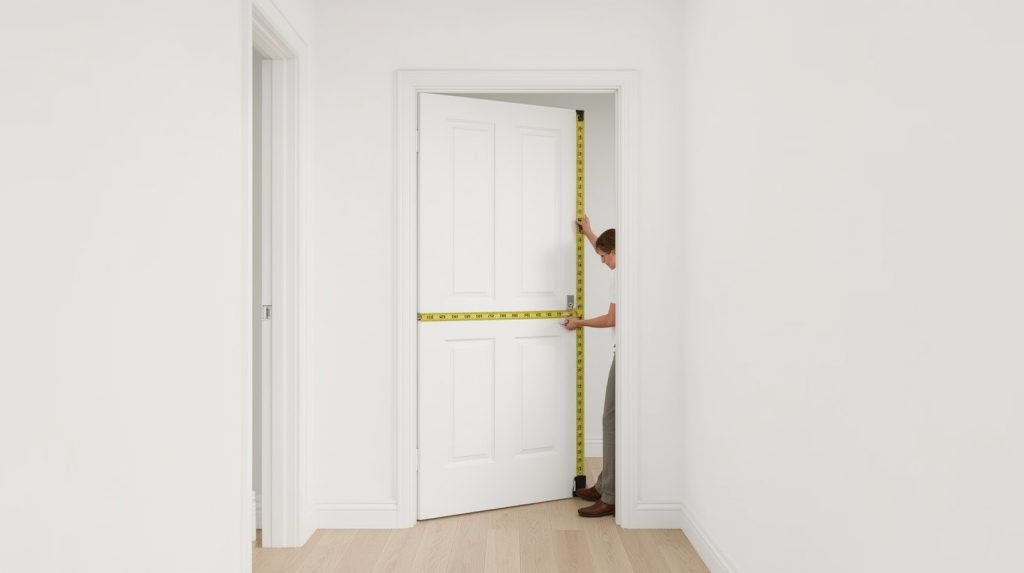

The most common standard interior door size is 80 inches tall, 30 inches wide, and 1 3/8 inches thick. Many homes also use 24, 28, 32, and 36 inch wide doors depending on the room, layout, and access needs. The right size helps your door open smoothly, close properly, protect privacy, and avoid damage to the frame, hinges, and floor.
Choosing the correct interior door size may seem simple, but even a small measuring mistake can lead to gaps, sticking, rubbing, or poor alignment. Whether you are replacing a bedroom door, bathroom door, hallway door, or closet door, understanding the basics can help you make a better decision before buying or installing anything.
Why Interior Door Size Matters More Than Most Homeowners Realize
Interior doors are used every day, but most homeowners do not think about size until something goes wrong. A door that is too wide may scrape against the frame. A door that is too short may leave a visible gap. A door that is too thick may not sit correctly on the hinges or latch properly.
The right interior door size improves comfort, privacy, and daily function. It helps each room feel finished and easy to use. It also protects the surrounding frame from extra stress.
A properly sized door should swing without rubbing, close without force, and line up evenly with the frame. If the door feels heavy, uneven, or difficult to close, the issue may not always be the door itself. The frame, hinges, floor clearance, and opening size all play a role.
What Is the Standard Interior Door Size?
The most common standard interior door size is 80 inches tall and 30 inches wide. This size is often used for bedrooms, bathrooms, hallways, and general room entries.
Most standard interior doors are also 1 3/8 inches thick. This thickness gives the door enough strength for daily use while keeping it light enough to open and close easily.
Common interior door widths include:
- 24 inches for small closets and tight spaces
- 28 inches for compact bathrooms or utility areas
- 30 inches for bedrooms and standard room entries
- 32 inches for wider access and better movement
- 36 inches for larger openings, accessibility, and modern layouts
The right size depends on the room, the existing frame, and how the space is used.
Common Interior Door Sizes by Room
Different rooms often need different door sizes. A bedroom door may not need the same width as a hallway door or closet door.
Bedroom Doors
A common bedroom door size is 30 inches wide and 80 inches tall. This size gives enough access for everyday use while still saving wall space.
Some larger bedrooms may use 32 inch doors, especially in newer homes or remodels. A wider door can make it easier to move furniture in and out of the room.
Bathroom Doors
Bathroom doors are often 28 or 30 inches wide. Smaller bathrooms may use narrower doors to make the layout feel less crowded.
Even with a smaller bathroom, the door should still open and close without hitting fixtures, cabinets, or walls. If space is limited, a professional may suggest a different swing direction or another door style.
Closet Doors
Closet doors can vary more than bedroom and bathroom doors. Some closets use 24 inch doors, while larger closets may use double doors, sliding doors, or wider hinged doors.
The best closet door size depends on the opening and how much access you need to the storage space.
Hallway and Utility Doors
Hallway doors, laundry room doors, and utility room doors may benefit from wider sizing. A 32 or 36 inch door can make it easier to carry baskets, tools, supplies, or furniture through the opening.
Standard Interior Door Height
The most common interior door height is 80 inches. This is often called a 6 foot 8 inch door.
Some modern homes use taller interior doors, such as 84 inches or 96 inches. Taller doors can make a room feel more open and upscale, but they usually require the right wall height, frame size, and installation plan.
If you are replacing an existing door, do not assume the height is standard. Older homes, remodels, and custom openings may have different measurements.
Standard Interior Door Width
Interior door width affects comfort, access, and room function. A narrow door may work for a closet, but it may feel inconvenient for a bedroom or main hallway.
A 30 inch door is a common choice for many interior rooms. A 32 inch door can provide more comfortable movement. A 36 inch door may be better for accessibility, large rooms, and areas where furniture needs to pass through easily.
Before choosing a width, look at the room layout. Check nearby walls, furniture, switches, and flooring transitions. A wider door is helpful only when the space allows it to open and function properly.
Standard Interior Door Thickness
Most interior doors are 1 3/8 inches thick. This is common for hollow core, solid core, and many residential interior doors.
Thickness matters because the door must match the frame, hinges, latch, and hardware. If the thickness is wrong, the door may not sit flush or close correctly.
Exterior doors are usually thicker and heavier because they need more strength, insulation, and security. Interior doors are designed more for privacy, appearance, and easy use inside the home.
How Door Frames Affect Interior Door Size
The door slab is only one part of the system. The frame is just as important.
A door needs the right frame opening to work correctly. If the frame is out of square, damaged, too tight, or too loose, even a correctly sized door can have problems.
Common signs of frame or sizing issues include:
- The door sticks near the top or bottom
- The door swings open or closed by itself
- The latch does not line up
- There are uneven gaps around the edges
- The door rubs against the floor
- The hinges feel strained or loose
These problems can come from poor installation, house settling, moisture, damaged hinges, or an incorrect door size.
How to Measure an Interior Door Correctly
Accurate measurement is the most important step before replacing an interior door.
Start by measuring the width of the existing door slab from side to side. Then measure the height from top to bottom. After that, measure the thickness along the edge of the door.
You should also check the frame opening. Measure the inside width and height of the frame where the door sits. Look at the gap around the door and see whether the frame appears straight.
For best results, measure in more than one place. Measure the top, middle, and bottom width. Then measure both sides for height. This helps you spot uneven areas before choosing a replacement.
If the measurements are different in multiple places, the frame may need adjustment before a new door is installed.
Interior Door Slab vs Pre Hung Door
When replacing an interior door, homeowners often choose between a slab door and a pre hung door.
A slab door is only the door panel. It does not include the frame or hinges. This option may work when the existing frame is in good condition and the new door matches the old one closely.
A pre hung door comes already attached to a frame. This can be a better choice when the old frame is damaged, uneven, or outdated.
The right choice depends on the condition of your current door system. If the frame is solid and square, a slab replacement may be enough. If the frame has issues, a pre hung door may provide a cleaner and more reliable result.
When You May Need a Custom Interior Door Size
Not every home has standard door openings. Older homes, remodeled spaces, converted rooms, and custom layouts may need special sizing.
You may need a custom interior door if:
- The opening is shorter or taller than standard
- The width does not match common door sizes
- The frame is uneven or damaged
- The home has older construction details
- The room needs a special design or access solution
Custom sizing can help avoid poor fit, uneven gaps, and forced installation. It also gives the door a cleaner finished appearance.
Choosing the Best Interior Door Size for Your Home
The best interior door size depends on more than the number on the label. You should think about the room, the purpose, the frame, and the way people move through the space.
For bedrooms, comfort and privacy matter most. For bathrooms, space and clearance are important. For closets, access and storage layout matter. For hallways and utility rooms, wider movement may be helpful.
A good door should feel natural to use. It should not make the room feel tight. It should not hit nearby fixtures. It should not require extra force to close.
When the size, frame, and hardware all work together, the door feels smooth, quiet, and dependable.
Signs Your Interior Door May Be the Wrong Size
A door that does not fit correctly will usually show clear warning signs.
You may notice scraping, sticking, uneven gaps, poor latch alignment, or visible light around the edges. The door may also feel loose, heavy, or unstable.
Sometimes the issue comes from the door size. Other times, the problem comes from the frame, hinges, moisture, or settling. This is why a professional inspection can be helpful before replacing the door.
Replacing the door without checking the frame can lead to the same problem happening again.
Why Professional Interior Door Installation Helps
Interior door installation requires more than placing a new slab in the opening. The door must be measured, aligned, trimmed if needed, fitted to the frame, and matched with the right hardware.
A professional can check the frame, confirm the right size, adjust the hinges, and make sure the latch lines up correctly. This helps prevent sticking, gaps, rubbing, and premature wear.
Repair Champions helps homeowners with interior door repair, replacement, and installation. If your door is damaged, misaligned, outdated, or difficult to use, a proper assessment can help you choose the right solution.
Final Thoughts on Standard Interior Door Size
The standard interior door size for many homes is 80 inches tall, 30 inches wide, and 1 3/8 inches thick. However, many rooms use different widths based on layout, comfort, and access needs.
Before replacing a door, measure carefully and check the frame condition. A correct fit improves privacy, comfort, appearance, and daily function.
If you are unsure which size you need, Repair Champions can help inspect the opening, recommend the right door size, and provide professional installation for a cleaner, smoother result.
FAQs
What is the most common standard interior door size?
The most common standard interior door size is 80 inches tall and 30 inches wide. Most interior doors are also 1 3/8 inches thick.
Are all interior doors the same size?
No. Interior doors come in several widths, including 24, 28, 30, 32, and 36 inches. The right size depends on the room and opening.
What size door is best for a bedroom?
A 30 inch wide and 80 inch tall door is common for many bedrooms. Some homes may use 32 inch doors for easier access.
What size door is best for a bathroom?
Many bathroom doors are 28 or 30 inches wide. Smaller bathrooms may use narrower doors to save space.
How do I know if my door frame is the problem?
If the door sticks, rubs, swings by itself, or has uneven gaps, the frame may be out of alignment or damaged.
Should I replace just the door or the whole frame?
If the frame is in good condition, replacing the door slab may work. If the frame is damaged or uneven, a pre hung door may be the better option.