Cyber Security Compliance: The Complete 2026 Guide to Protecting Your Business and Staying Legal
What is Cyber Security Compliance?
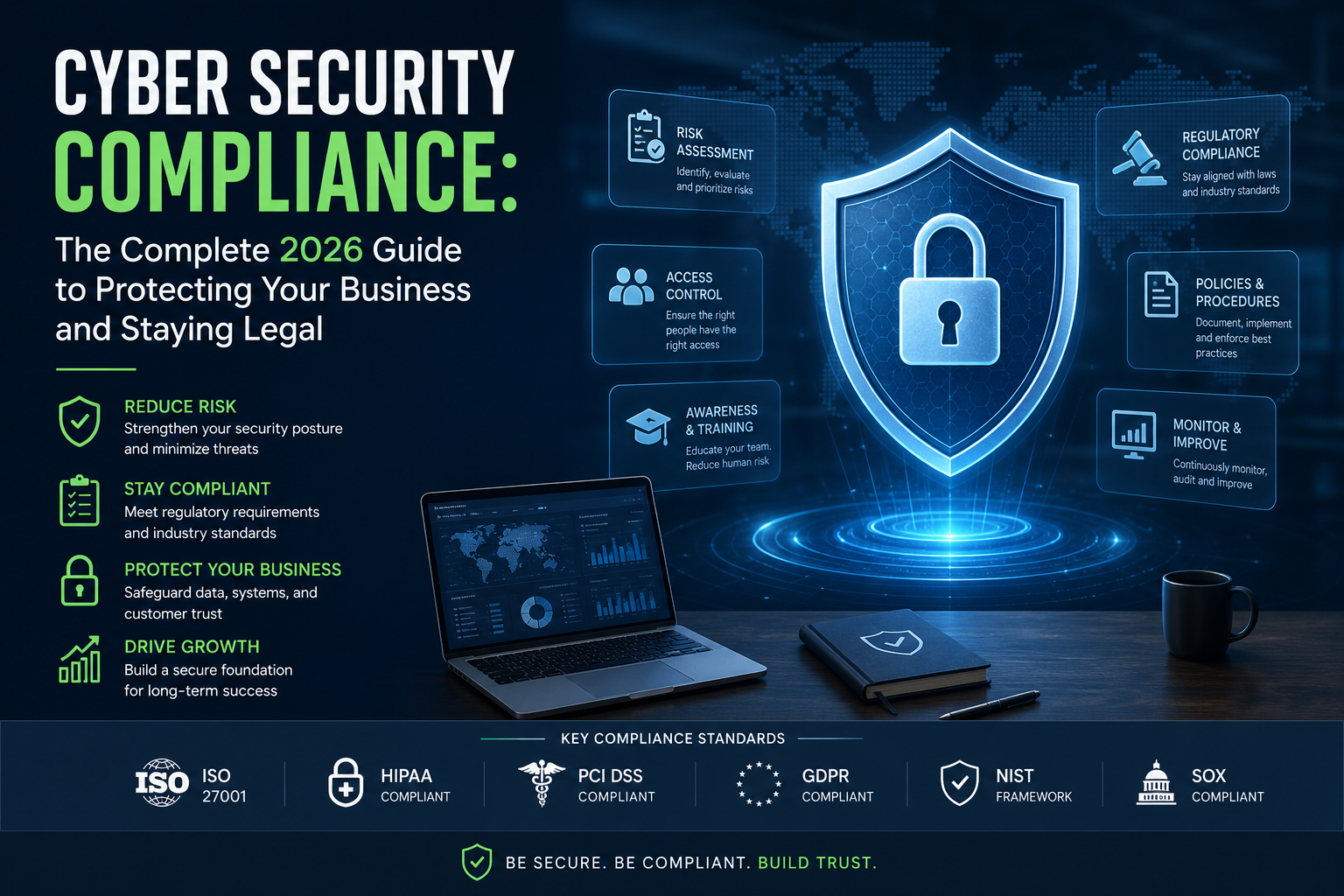
Cyber security compliance is not just a buzzword anymore—it’s the backbone of how modern businesses survive in a digital-first world. At its core, cyber security compliance means adhering to a set of laws, regulations, and standards designed to protect sensitive data and systems from cyber threats. Think of it like traffic rules for the internet: without them, chaos would be inevitable, and accidents (or breaches) would happen constantly.
But here’s the twist—compliance isn’t just about ticking boxes. It’s about creating a structured, repeatable system that ensures your organization is consistently protecting its data, users, and operations. Whether it’s customer information, financial records, or intellectual property, compliance frameworks ensure that everything is handled securely.
In 2026, this concept has evolved dramatically. With the rise of cloud computing, remote work, and AI-driven systems, compliance now extends far beyond traditional IT environments. It touches everything—from third-party vendors to AI tools and even employee behavior. Organizations are expected to demonstrate not only that they have controls in place but that those controls actually work in real-world scenarios.
Imagine building a house. Compliance is not just installing locks on doors; it’s designing the entire structure to resist intruders, natural disasters, and internal failures. That’s the level of depth modern cyber security compliance demands.
Key Cyber Security Compliance Statistics (2026)
Let’s talk numbers—because they reveal just how critical compliance has become.
Recent reports show that 93% of companies now consider cybersecurity a top priority, yet more than half operate with minimal or no dedicated security staff. This gap highlights a dangerous reality: businesses understand the importance of compliance but often lack the resources to implement it effectively.
Another eye-opening statistic comes from AI-related risks. Around 87% of organizations identified AI vulnerabilities as the fastest-growing cyber risk in 2025, signaling a massive shift in how threats are evolving. And it doesn’t stop there—68% of organizations have already experienced AI-related data leaks, yet only 23% have formal AI security policies.
Compliance is also proving its value in real-world outcomes. Environments that follow structured compliance frameworks show remarkable resilience. For instance, 99.62% of HITRUST-certified environments remain breach-free, demonstrating how powerful standardized compliance can be.
From a business perspective, compliance is no longer just about avoiding fines. Around 77% of executives believe compliance directly contributes to business success, making it a strategic advantage rather than a cost center.
So, what’s the takeaway here? Cyber security compliance isn’t optional anymore—it’s a competitive necessity. Companies that embrace it gain trust, resilience, and long-term growth, while those that ignore it risk falling behind or, worse, facing devastating breaches.
Major Cyber Security Compliance Frameworks
If cyber security compliance is the “what,” then frameworks are the “how.” These frameworks provide structured guidelines that organizations can follow to secure their systems and meet regulatory requirements.
ISO 27001
ISO 27001 is like the gold standard of information security. It focuses on building an Information Security Management System (ISMS) that systematically manages risks. What makes it powerful is its adaptability—it works for startups, enterprises, and everything in between.
Organizations that adopt ISO 27001 don’t just secure their data; they create a culture of security. It’s not about installing tools—it’s about embedding security into daily operations.
NIST Cybersecurity Framework
The NIST framework takes a more flexible, risk-based approach. It revolves around five core functions: identify, protect, detect, respond, and recover. This makes it incredibly practical for organizations that want a structured yet adaptable compliance model.
In 2026, updates like NIST CSF 2.0 emphasize enterprise-wide accountability and integrated incident response planning, showing how compliance now involves every department—not just IT.
GDPR and Data Protection Laws
When it comes to data privacy, GDPR set the global benchmark. It focuses on how personal data is collected, processed, and stored. And it’s not just a European thing anymore—many countries have adopted similar regulations.
SOC 2 and PCI DSS
SOC 2 is essential for service organizations, especially SaaS companies, while PCI DSS focuses on securing payment data. These frameworks ensure that businesses handling sensitive information maintain strict security controls.
Here’s a quick comparison:
| Framework | Focus Area | Best For |
| ISO 27001 | Information security management | All industries |
| NIST CSF | Risk-based security controls | Government & enterprises |
| GDPR | Data privacy | Organizations handling EU data |
| SOC 2 | Service security | SaaS companies |
| PCI DSS | Payment security | E-commerce & finance |
Each framework serves a purpose, but the real magic happens when organizations combine them strategically.
Benefits of Cyber Security Compliance
Why go through all this effort? Because the benefits are massive—and not just from a security standpoint.
First, compliance builds trust. Customers today are more aware than ever about how their data is handled. When your organization is compliant, it signals that you take security seriously. This trust can directly translate into higher customer retention and brand loyalty.
Second, compliance reduces risk. Think of it as a safety net that catches vulnerabilities before attackers do. Instead of reacting to breaches, compliant organizations proactively identify and fix weaknesses.
Third, compliance opens doors. Many enterprise clients and partners require proof of compliance before doing business. Without it, you might not even get a seat at the table.
And let’s not forget financial benefits. Avoiding fines, preventing breaches, and improving operational efficiency can save millions. Compliance might seem expensive upfront, but the long-term ROI is undeniable.
Challenges in Cyber Security Compliance
Now, let’s be real—compliance isn’t easy. If it were, every company would already be fully compliant.
One of the biggest challenges is complexity. Regulations are constantly evolving, and keeping up with them can feel like chasing a moving target. In 2026, organizations face overlapping requirements from multiple frameworks, making compliance even more complicated.
Another major issue is the resource gap. As mentioned earlier, many companies lack dedicated security teams. This means existing staff are often stretched thin, juggling multiple responsibilities.
Then there’s the AI factor. AI adoption is outpacing compliance controls, creating what experts call a “governance gap.” Nearly 70% of organizations admit they struggle to keep up with AI-related compliance requirements.
It’s like trying to build a plane while flying it. You need to stay secure while continuously adapting to new threats and regulations—a challenging balancing act.
Step-by-Step Guide to Achieve Compliance
So, how do you actually become compliant? Let’s break it down.
1. Risk Assessment
Start by identifying what you need to protect. This includes data, systems, and processes. Assess potential threats and vulnerabilities to understand your risk landscape.
2. Implement Policies and Controls
Once you know your risks, create policies to address them. This could include access controls, encryption, and incident response plans.
3. Continuous Monitoring
Compliance isn’t a one-time task—it’s an ongoing process. Regular audits, monitoring, and updates are essential to maintain compliance.
Think of it like fitness. You don’t go to the gym once and expect to stay healthy forever. The same applies to cyber security.
Role of AI in Cyber Security Compliance
AI is both a blessing and a curse when it comes to compliance.
On one hand, AI can automate repetitive tasks, analyze large datasets, and detect threats faster than humans. This makes compliance more efficient and scalable.
On the other hand, AI introduces new risks. Poorly implemented AI systems can lead to data leaks, bias, and security vulnerabilities. That’s why governance is critical.
Organizations with strong AI governance frameworks experience 45% fewer security incidents, proving that structured compliance makes a real difference.
Future of Cyber Security Compliance
The future of compliance is dynamic, complex, and deeply integrated with technology.
We’re seeing a shift toward proactive security models, where organizations anticipate threats rather than react to them. AI governance, Zero Trust architecture, and real-time monitoring are becoming standard practices.
Regulations are also expanding globally, covering everything from data privacy to AI usage. This means compliance will become even more critical—and more challenging—in the coming years.
Best Practices for Cyber Security Compliance
If you want to stay ahead, here are a few practical tips:
- Build a security-first culture within your organization
- Automate compliance processes wherever possible
- Regularly train employees on security awareness
- Conduct frequent audits and risk assessments
- Stay updated with evolving regulations
These practices don’t just help you stay compliant—they make your entire organization more resilient.
Conclusion
Cyber security compliance is no longer just a regulatory requirement—it’s a strategic necessity. In a world where cyber threats are evolving faster than ever, compliance provides the structure and discipline needed to stay secure.
From protecting sensitive data to building customer trust and enabling business growth, compliance touches every aspect of modern organizations. The companies that embrace it will thrive, while those that ignore it risk falling behind.












Post Comment